
How Many Layers of Ceramic Coating Can You Apply? (The Definitive Guide)
Quick Answer: Generally, 2 to 3 layers is the professional standard for ceramic coating application. This typically includes 1–2 base coats for thickness and protection, plus 1 top coat for slickness and hydrophobic performance. While it's technically possible to apply more layers, doing so rarely provides additional benefits and can actually compromise the coating's integrity.
When investing in ceramic coating for your luxury vehicle, more isn't always better. The question isn't just how many layers you
can apply, it's how many you
should apply to achieve optimal protection without wasting product or risking application failures.
The Science of Layering: Why More Isn't Always Better
Understanding ceramic coating layering requires looking at the chemistry happening at a molecular level.
The Bonding Process
The first layer of ceramic coating creates a chemical bond with your vehicle's clear coat through a process called cross-linking. Silicon dioxide (SiO2) nanoparticles in the coating penetrate microscopic imperfections in the paint surface, creating an anchor point. Each subsequent layer bonds not to the clear coat, but to the previous ceramic layer. This distinction is crucial because it affects how well additional layers adhere.
Diminishing Returns
There's a persistent myth in the detailing world that 10 layers of ceramic coating will provide exponentially better protection than 3 layers. The reality is far different. After 3–4 layers, additional coats often fail to bond properly. The result? Issues like solvent trap (where solvents become trapped between layers), cloudiness that obscures your paint's depth, or even peeling as improperly bonded layers separate from the surface.
Thickness vs. Performance
Most professional-grade ceramic coatings add approximately 1–2 microns of thickness per layer. The optimal total thickness for ceramic coating typically falls between 2–5 microns. Beyond this range, you're not enhancing protection, you're creating potential problems. Think of it like this: a luxury timepiece doesn't need a thicker crystal to be more scratch-resistant; it needs the right crystal applied correctly.
The Ideal Setup: Base Coat vs. Top Coat
Professional ceramic coating systems are engineered with specific layers serving distinct purposes.
Base Coat: The Foundation
The base coat (or coats) serves as your protection foundation. These layers prioritize hardness (often rated at 9H on the pencil hardness scale), UV resistance to prevent oxidation, and chemical resistance against environmental contaminants like bird droppings, tree sap, and road salt. Base coats create the barrier between the elements and your vehicle's paint.
Top Coat: The Slick Layer
The top coat is where the magic of ceramic coating becomes visible. This layer focuses on hydrophobic properties, creating water contact angles of 110 degrees or higher, and reducing surface tension to produce that signature water beading effect. It's also the layer that provides the slick, smooth feel that makes washing your vehicle effortless.
Why 2+1 is the "Sweet Spot"
The professional standard of two base coats plus one top coat isn't arbitrary. This configuration provides 3–5 years of protection while minimizing the risks associated with over-application. It delivers sufficient thickness for durability, adequate chemical resistance for daily environmental exposure, and the hydrophobic performance luxury car owners expect, all without crossing into diminishing returns territory.
Factors That Change the Layer Count
The optimal number of ceramic coating layers isn't one-size-fits-all. Several factors influence the ideal configuration for your vehicle.
Environmental Needs
Your local environment plays a significant role in determining layer requirements. Do you live in a high-salt coastal area where chemical etching from sea spray is constant? Or perhaps in a region with intense UV exposure that accelerates oxidation? Areas with harsh winters and aggressive road salt usage (common in the Midwest, including Cincinnati) may benefit from an additional base coat for enhanced chemical resistance.
Vehicle Usage
A daily driver that sees 15,000 miles annually and regular exposure to highway debris faces different challenges than a garage queen that emerges only for weekend drives and car shows. Higher-use vehicles may warrant the additional protection of an extra base coat, while collector vehicles can often achieve excellent results with a 1+1 configuration.
Product Concentration
Not all ceramic coatings are created equal. High-solids professional coatings with SiO2 concentrations of 80% or higher often provide more protection in a single layer than consumer-grade "ceramic sprays" with 20% SiO2 concentration do in five layers. This is why professional application using premium products delivers superior long-term results, you're paying for quality, not just quantity.
The Risks of Over-Application (What Detailers Won't Tell You)
While some detailers might suggest that more layers equal better protection (and a higher invoice), over-application creates real problems.
Solvent Trap
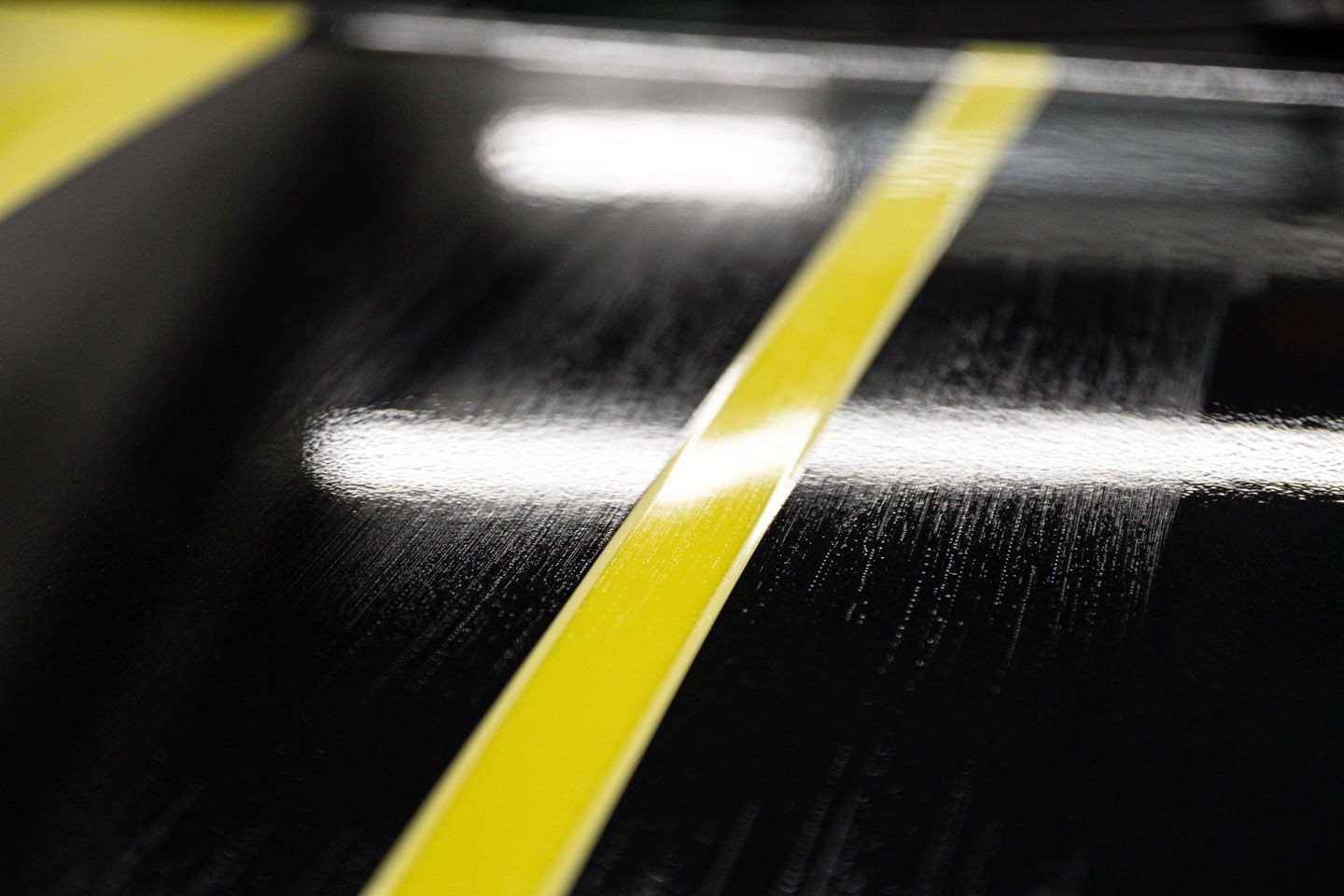
Ceramic coatings contain solvents that must evaporate during the curing process. When layers are applied too quickly or in excessive quantities, these solvents become trapped between layers. The coating remains soft indefinitely, attracts contamination, and develops a hazy appearance that's difficult to correct.
Brittleness
Ceramic coatings need a degree of flexibility to move with your paint as it expands and contracts with temperature changes. Excessive thickness reduces this flexibility, making the coating brittle. Over time, this brittleness leads to micro-cracking, fine fractures in the coating that compromise its protective abilities and visual clarity.
Visual Clarity
One of the primary reasons to invest in ceramic coating for a luxury vehicle is to enhance the paint's visual depth and achieve that coveted mirror finish. Stacking too many layers creates a diffusion effect, where light scatters as it passes through multiple interfaces. The result is a loss of clarity and depth, the opposite of what you're trying to achieve.
Professional Application Process
Achieving optimal results with ceramic coating isn't just about the number of layers, it's about proper application technique.
Surface Prep (The 90% Rule)
Professional detailers often say that 90% of a great ceramic coating application happens before the coating ever touches the paint. This includes thorough decontamination to remove iron particles, tar, and bonded contaminants, followed by paint correction to eliminate swirls and scratches. Ceramic coating magnifies whatever's underneath, so starting with a flawless surface is non-negotiable.
Flash Times & Curing
Each layer of ceramic coating requires adequate flash time, the period where the coating begins its polymerization process and bonds to the surface. Rushing this step by applying layers too quickly prevents proper cross-linking and leads to the issues mentioned earlier. Professional-grade coatings typically require 3–4 hours between layers, though this varies by product formulation and environmental conditions.
Climate Control
Temperature and humidity play crucial roles in ceramic coating application. Most professional coatings require application in controlled environments between 60–80°F with humidity levels below 70%. Higher humidity can interfere with the curing process, while temperatures outside the optimal range affect how the coating levels and bonds. This is why reputable detailing facilities invest in climate-controlled application bays rather than working outdoors.
Frequently Asked Questions
Can I apply ceramic coating over wax?
No. Ceramic coating requires direct contact with your vehicle's clear coat (or the previous ceramic layer) to bond properly. Wax creates a barrier that prevents this bonding. Any existing wax or sealant must be completely removed through chemical stripping or polishing before ceramic coating application.
How long do I have to wait between layers?
Most professional ceramic coatings require 1–4 hours between layers, depending on the specific product formulation. Some high-end coatings specify longer flash times of 12–24 hours between certain layers. This isn't arbitrary, it's the time required for proper cross-linking and bonding. Rushing this step is one of the most common causes of coating failure.
Does more layers mean more scratch resistance?
Slightly, but not significantly. Each layer adds 1–2 microns of hardness, which provides some scratch resistance against light marring from automated car washes or improper washing technique. However, ceramic coating is not armor plating. It won't prevent rock chips, key scratches, or other physical damage. For that level of protection, paint protection film (PPF) is the appropriate solution, and ceramic coating can be applied over PPF for the best of both worlds.
The Luxury Car Care