
Solvent-Based vs. Water-Based Ceramic Coatings: The Chemistry Behind Your $1,000+ Investment
The detailing industry has embraced "ceramic coating" as its flagship term, but not all ceramic coatings deliver the same protection. Walk into any auto parts store, and you'll find bottles labeled "ceramic spray" for $19.99. Search online, and you'll see professional installers charging $1,500 or more for what appears to be the same service. So what separates a weekend warrior product from an engineering-grade protective system?
The answer isn't in the ceramic itself. It's in the carrier that delivers it.
Both solvent-based and water-based ceramic coatings use Silicon Dioxide (SiO₂) as their protective ingredient. The critical difference lies in the liquid medium that transports the SiO₂ to your vehicle's clear coat. This carrier determines everything: how deeply the coating bonds, how long it lasts, and whether it can withstand the thermal cycling and chemical assault your luxury vehicle faces on Midwest roads.
As a former engineer who's spent years perfecting paint protection systems, I've learned that the chemistry behind these coatings matters far more than marketing claims. Let's break down the science and the practical reality of what's actually happening on your paint surface.
What is a Solvent-Based Ceramic Coating?
Solvent-based ceramic coatings use chemical solvents (typically mineral spirits or proprietary hydrocarbon blends) to suspend a high concentration of SiO₂ in solution. These aren't the "spray and wipe" products you'll find at retail stores. They're professional-grade formulations that require controlled environments, proper ventilation, and trained applicators who understand the narrow curing window.
The Covalent Bond: Engineering-Grade Adhesion
Here's where chemistry becomes critical. When a solvent-based coating is applied to properly prepared paint, the solvent carrier helps the SiO₂ particles penetrate the microscopic pores and imperfections in your clear coat. As the solvent evaporates (a process called "flashing"), the ceramic molecules undergo cross-linking, forming covalent bonds directly with the paint's molecular structure.
This isn't just sitting on your paint. It's becoming part of your paint's surface architecture.
The result? A protective layer that measures 9H to 10H on the pencil hardness scale, with gloss readings between 85 and 95 gloss units. More importantly, this bonded layer provides chemical resistance across pH ranges from 2 to 12, meaning everything from acidic bird droppings to alkaline soaps used in car washes can't easily compromise the surface.
The Professional Reality: Pros and Cons
Advantages:
- Durability that extends 3 to 9+ years with proper maintenance
- Superior depth and mirror-finish clarity that enhances metallic and pearl paint systems
- Maximum resistance to chemical contamination, UV degradation, and thermal cycling
- Easier long-term maintenance due to higher surface tension and hydrophobic properties
The Trade-Offs:
- High VOC (Volatile Organic Compound) content requires professional-grade respirators and ventilation systems
- Extremely unforgiving application. High spots, streaking, and improper leveling can only be corrected through paint correction
- Temperature- and humidity-controlled environments are necessary for optimal curing
- Requires infrared curing or extended cure times for maximum cross-linking
This is why you can't buy true solvent-based professional coatings at retail stores. The application risk and environmental requirements make them unsuitable for consumer use.
What is a Water-Based Ceramic Coating?
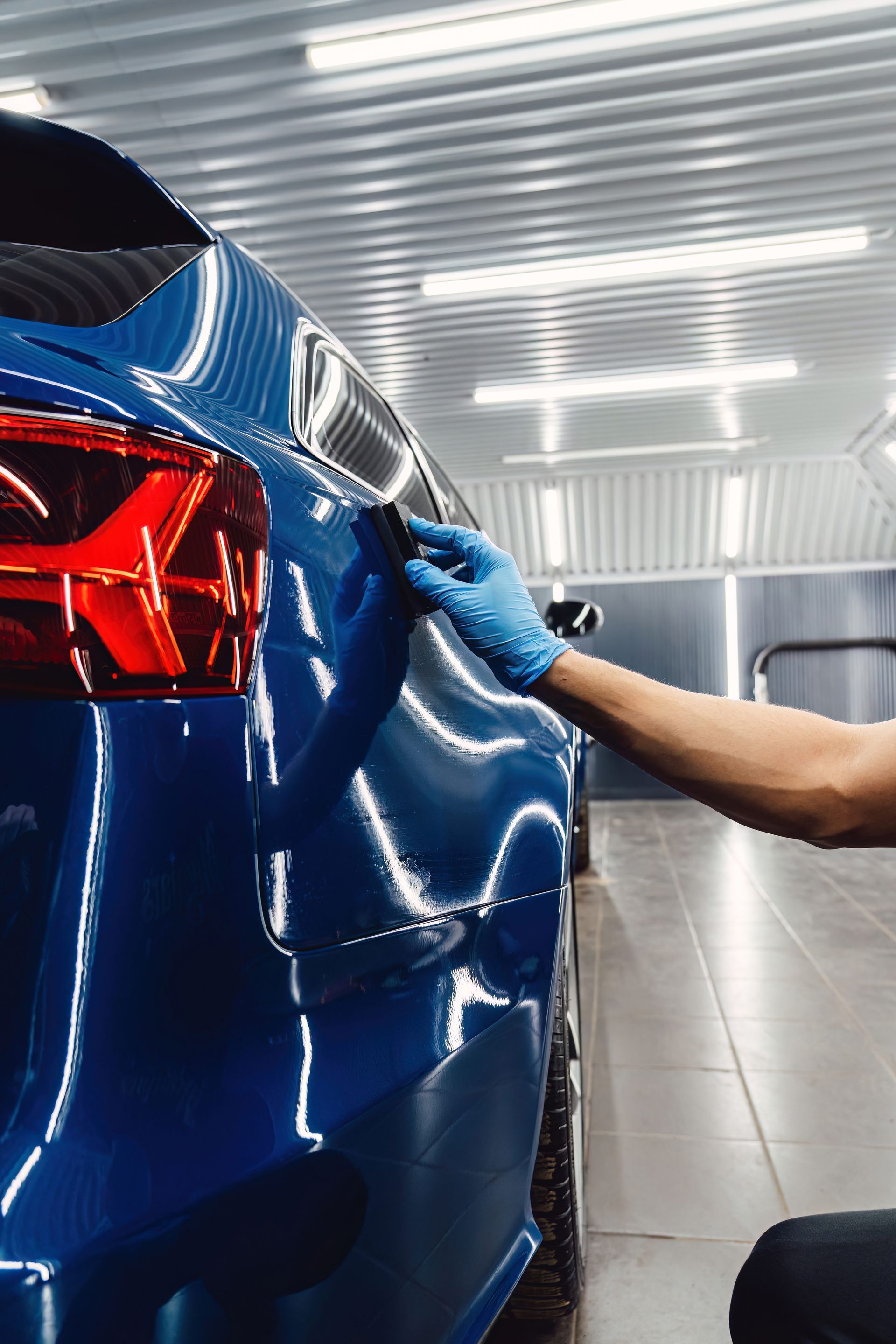
Water-based ceramic coatings use deionized water or aqueous solutions as their carrier medium. You'll find these formulations in ceramic spray detailers, SiO₂ boosters, and consumer-grade "ceramic coating kits." The chemistry here prioritizes ease of use and environmental friendliness over maximum bonding strength.
Surface-Level Protection: A Different Bonding Mechanism
When water-based coatings are applied, the SiO₂ particles remain suspended in the aqueous solution until the water evaporates. However, water's higher surface tension and slower evaporation rate mean the ceramic particles typically remain at the surface level rather than penetrating the clear coat's microscopic structure.
The bond that forms is weaker. Think of it as a protective film sitting on top of your paint rather than integrating with it. This is why water-based coatings typically measure 7H to 8H on the hardness scale and offer more modest gloss enhancement.
The DIY Trade-Off: Accessibility vs. Longevity
Advantages:
- Low to zero VOC emissions, safe for home garage applications
- Minimal odor and no specialized ventilation required
- Forgiving application with wider working time
- Cost-effective for regular "topper" applications
- Eco-friendly formulations with reduced environmental impact
The Limitations:
- Durability ranges from 6 months to 2 years maximum
- Lower chemical resistance and more susceptible to alkaline car wash chemicals
- Softer finish that's more prone to water spotting and contamination bonding
- Sensitive to humidity during curing. High moisture can prevent proper formation
- Requires more frequent reapplication to maintain protection
For weekend enthusiasts who enjoy regular detailing sessions, water-based coatings offer a practical maintenance solution. But they're fundamentally different products serving different purposes.
Head-to-Head Comparison: Professional vs. Consumer Grade
| Feature | Solvent-Based (Professional) | Water-Based (Consumer/Spray) |
|---|---|---|
| Durability | 3 to 9+ years | 6 months to 2 years |
| Pencil Hardness | 9H to 10H | 7H to 8H |
| Gloss Depth | 85 to 95 GU (mirror-like) | High shine (surface level) |
| Carrier Medium | Chemical solvents | Deionized water |
| SiO₂ Concentration | High (typically 70 to 85%) | Moderate (typically 30 to 50%) |
| Bonding Mechanism | Covalent (integrated) | Mechanical (surface) |
| Application Complexity | Professional only | DIY friendly |
| Chemical Resistance | pH 2 to 12 | pH 4 to 10 |
| VOC Level | High (requires ventilation) | Low to zero |
| Curing Requirements | Controlled environment | Ambient (humidity sensitive) |
| Flash Time | 1 to 3 minutes | 5 to 10 minutes |
Why Luxury Car Care Chooses Professional Solvent-Based Systems
When you're protecting a $60,000+ investment, the chemistry has to be reliable. In the Ohio climate, we face temperature swings from sub-zero winters to 90°+ summers, along with road salt contamination that can compromise lesser protection systems. This area isn't California. We need coatings that maintain their integrity regardless of environmental stress.
The Engineer's Perspective: Film Thickness and Long-Term ROI
After the carrier solvent evaporates, solvent-based coatings leave a thicker protective film, typically 2 to 3 microns, compared to water-based coatings' 0.5 to 1 micron layer. This additional thickness matters when you're talking about multi-year protection. The thicker film provides more material to absorb the daily micro-abrasions from automated car washes, harder water deposits, and environmental fallout.
From a pure ROI standpoint, a professional solvent-based coating that lasts 5 to 7 years costs less per year than repeatedly applying 6-month water-based products. More importantly, it preserves your vehicle's clear coat integrity, which directly impacts resale value and long-term appearance.
Maintenance Reality: Why Solvent-Based is Actually Easier
Here's what surprises most luxury car owners: properly applied solvent-based coatings require less maintenance effort over their lifetime. The superior hydrophobic properties (contact angles exceeding 110°) mean contaminants can't bond as easily. Road grime, water spots, and environmental fallout rinse away with less mechanical agitation, which means less risk of introducing swirl marks during routine washing.
Water-based coatings, while easier to apply, require more frequent reapplication and are more sensitive to the products you use during maintenance washes. The softer surface is also more prone to water spotting from our region's hard water.
Why Luxury Car Care Chooses Professional Solvent-Based Systems
When you're protecting a $60,000+ investment, the chemistry has to be reliable. In the Ohio climate, we face temperature swings from sub-zero winters to 90°+ summers, along with road salt contamination that can compromise lesser protection systems. This area isn't California. We need coatings that maintain their integrity regardless of environmental stress.
The Engineer's Perspective: Film Thickness and Long-Term ROI
After the carrier solvent evaporates, solvent-based coatings leave a thicker protective film, typically 2 to 3 microns, compared to water-based coatings' 0.5 to 1 micron layer. This additional thickness matters when you're talking about multi-year protection. The thicker film provides more material to absorb the daily micro-abrasions from automated car washes, harder water deposits, and environmental fallout.
From a pure ROI standpoint, a professional solvent-based coating that lasts 5 to 7 years costs less per year than repeatedly applying 6-month water-based products. More importantly, it preserves your vehicle's clear coat integrity, which directly impacts resale value and long-term appearance.
Maintenance Reality: Why Solvent-Based is Actually Easier
Here's what surprises most luxury car owners: properly applied solvent-based coatings require less maintenance effort over their lifetime. The superior hydrophobic properties (contact angles exceeding 110°) mean contaminants can't bond as easily. Road grime, water spots, and environmental fallout rinse away with less mechanical agitation, which means less risk of introducing swirl marks during routine washing.
Water-based coatings, while easier to apply, require more frequent reapplication and are more sensitive to the products you use during maintenance washes. The softer surface is also more prone to water spotting from our region's hard water.
Which Coating is Right for Your Vehicle?
The honest answer depends on your expectations and how you view your vehicle.
Choose water-based coatings if:
- You enjoy hands-on detailing as a regular hobby
- You want a low-commitment way to boost shine and protection between professional details
- You're maintaining a daily driver where maximum longevity isn't the primary concern
- You prefer eco-friendly products with minimal chemical exposure
Choose professional solvent-based coatings if:
- You view your vehicle as a long-term investment worth protecting at the highest level
- You want mirror-finish depth and clarity that lasts years, not months
- You live in climates with extreme temperature fluctuations, road salt, or harsh environmental conditions
- You value the convenience of less frequent maintenance and easier routine care
- You're willing to invest in a professional application for professional-grade results
At Luxury Car Care, we don't offer "spray ceramic" services because we don't believe in watered-down protection. Every vehicle that leaves our facility in Mason, Ohio, receives the same engineering-grade solvent-based systems we'd apply to our own vehicles. The chemistry is proven. The longevity is documented. And the difference is visible.
Your luxury vehicle deserves more than a marketing buzzword. It deserves protection backed by chemistry, not hype.
Don't settle for watered-down protection.
Contact Luxury Car Care in Mason, OH, for a professional-grade
ceramic coating consultation. Let's discuss which system is engineered for your specific vehicle, driving conditions, and long-term goals. Because when you understand chemistry, the choice becomes clear.
Frequently Asked Questions
Can I apply ceramic coating over wax?
No. Ceramic coating requires direct contact with your vehicle's clear coat (or the previous ceramic layer) to bond properly. Wax creates a barrier that prevents this bonding. Any existing wax or sealant must be completely removed through chemical stripping or polishing before ceramic coating application.
How long do I have to wait between layers?
Most professional ceramic coatings require 1–4 hours between layers, depending on the specific product formulation. Some high-end coatings specify longer flash times of 12–24 hours between certain layers. This isn't arbitrary, it's the time required for proper cross-linking and bonding. Rushing this step is one of the most common causes of coating failure.
Does more layers mean more scratch resistance?
Slightly, but not significantly. Each layer adds 1–2 microns of hardness, which provides some scratch resistance against light marring from automated car washes or improper washing technique. However, ceramic coating is not armor plating. It won't prevent rock chips, key scratches, or other physical damage. For that level of protection, paint protection film (PPF) is the appropriate solution, and ceramic coating can be applied over PPF for the best of both worlds.
The Luxury Car Care