
What Happens When Paint Protection Film Gets Scratched?

When paint protection film gets scratched, the film takes the damage instead of your paint. That is exactly what it was installed to do. What happens next comes down to how deep the scratch goes, and there are only three possibilities. In two of them, your paint is completely untouched.
The question most people are really asking is whether they need to pay someone to fix it. Often the answer is no. A scratch sitting in the film is not the same as a scratch in your paint. Before you book anything, it helps to know which of the three you are looking at, and how paint protection film is built.
The Short Answer
- Scratch in the topcoat. Heals itself with heat. One warm afternoon in the sun, and it is usually gone. Paint untouched.
- Scratch into the urethane layer. Permanent, but cosmetic. The film keeps protecting the panel. Paint untouched.
- Scratch through the film. The paint underneath is exposed. The panel needs the film removed and the paint assessed before new film goes on.
Most of what people find on their film falls into the first category.
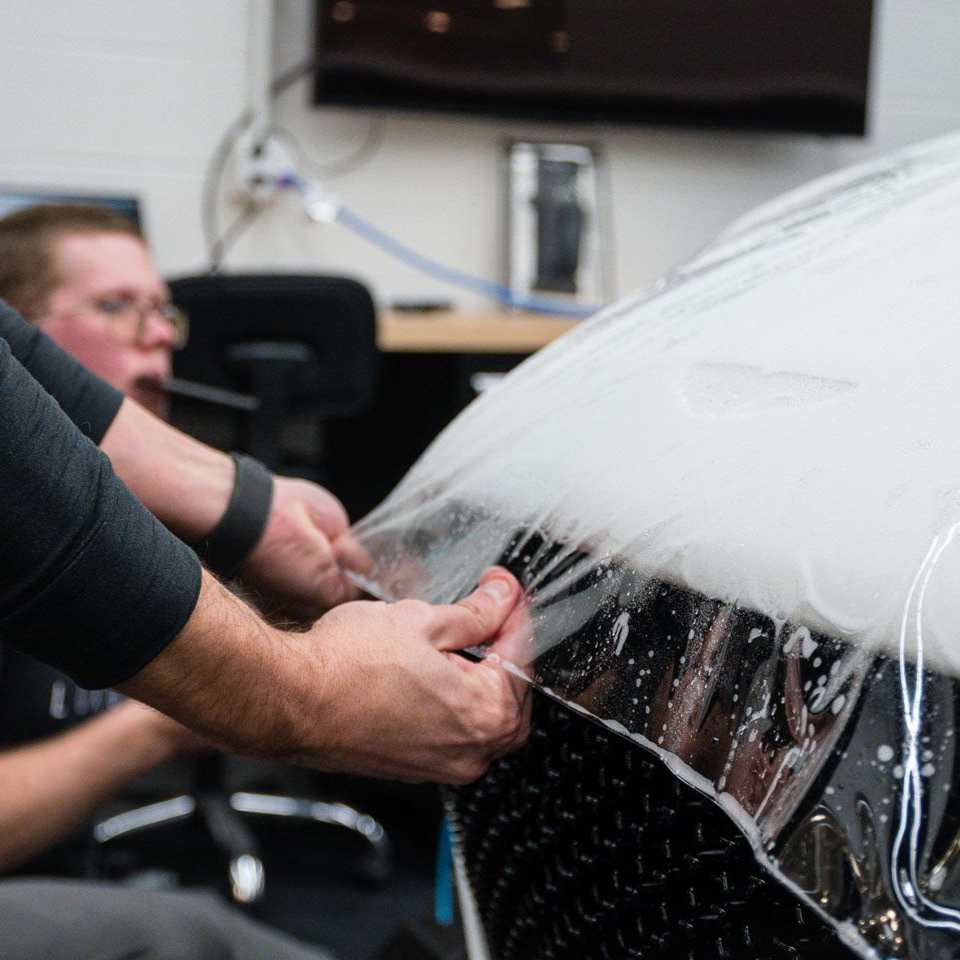
Three Kinds of Scratch, and Only One of Them Heals
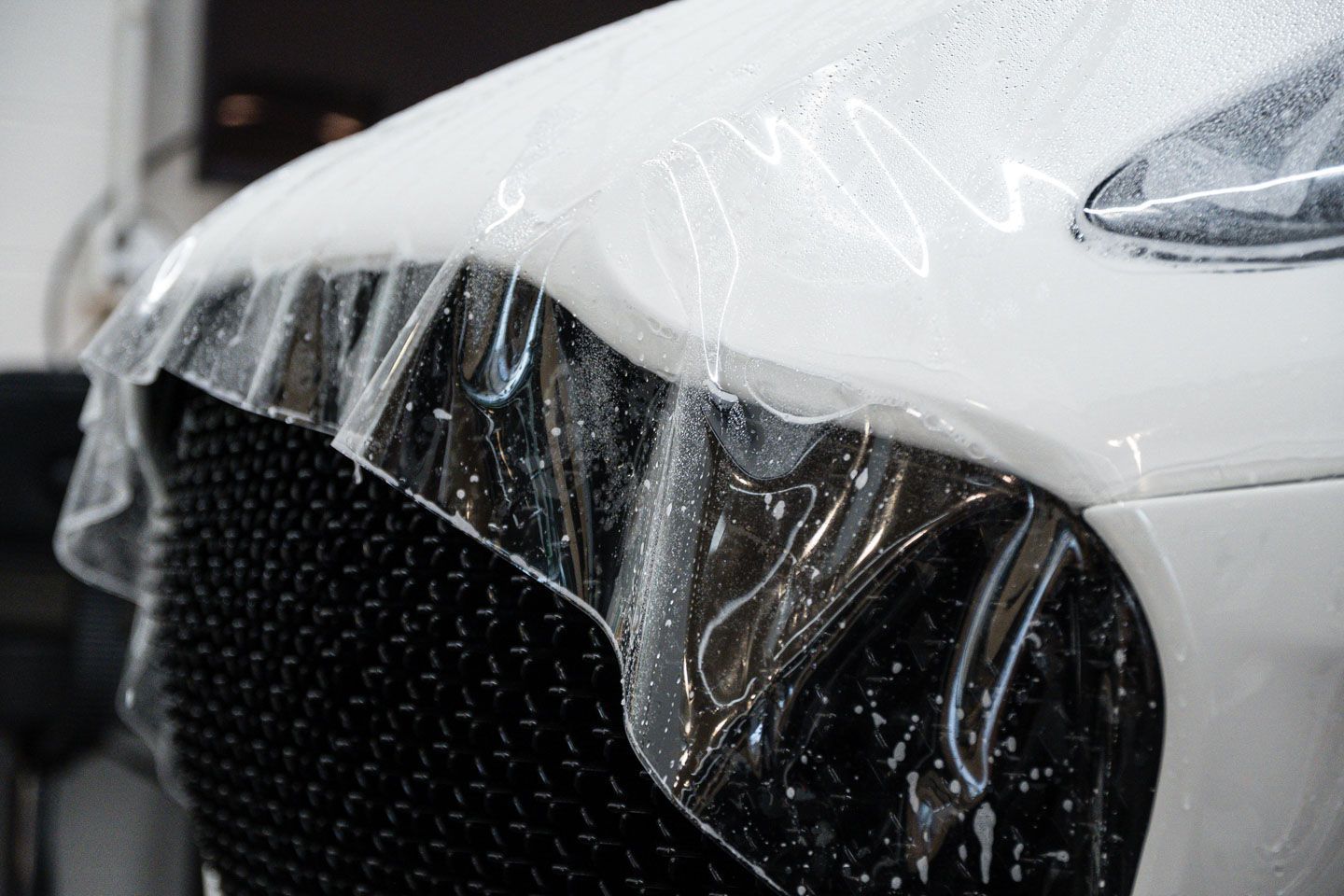
Paint protection film is not a single sheet of plastic. It is a layered product, usually 6 to 8 mil thick in total, built on a thermoplastic polyurethane body with a thin elastomeric polyurethane topcoat bonded to the outside. That topcoat is the layer doing the self-healing. Everything below it is the impact layer.
Scratches in the topcoat
These are the fine, hairline marks and swirls you only see in direct sunlight or under a shop light. They come from wash mitts dragging grit, automated car wash brushes, drying towels, and everyday contact. The topcoat is elastic, so when it is warmed, the polymer chains reflow and close the mark.
Scratches into the urethane layer
If something sharper catches the panel- a key edge, a zipper, a branch- the mark can cut past the topcoat into the polyurethane body. That layer is not elastic in the same way, so the mark stays. This is the tier people find most frustrating, because the film still looks damaged after a week of sun and no amount of heat changes it.
It is also the tier that matters least. The film is still bonded, still sealed at the edges, and still absorbing impacts. Your paint has not been touched.
Scratches through the film
A deep gouge, a hard rock strike, or a keying incident can cut all the way through. Now the film has an open edge, the clear coat below is exposed, and dirt and moisture can work underneath. This is the one tier that needs attention reasonably soon, because a breached panel stops functioning as a sealed barrier. If the paint below has been cut, it will need paint correction or touch-up before any new film is installed over it.
How to Tell Which One You Have
You do not need a light meter or a thickness gauge to sort this out. Run a fingernail across the mark, lightly, at a right angle to it.
- Your nail does not catch. The mark is in the topcoat. Heat will clear it.
- Your nail catches, but the film is unbroken, and you cannot see an edge. The mark is in the urethane. It is permanent and cosmetic. The film is still protecting the panel.
- Your nail catches, and you can see or feel a break in the film itself. The film is breached. The paint below is exposed, and the panel should be inspected.
Do the test in shade with the panel cool. Warm film in direct sun may already be closing a topcoat mark, which makes light scratches easy to misjudge.
How Self-Healing Actually Works
Self-healing is a real material property, not a marketing term, but it is narrower than most people expect. The topcoat on films from XPEL, SunTek, 3M and STEK is an elastomeric polymer. Heat gives those polymer chains enough energy to move, and they settle back into a flat surface, closing the fine break in the coating.
Three heat sources do the job safely:
- Direct sunlight. The slowest and the safest. Park the panel facing the sun on a warm day.
- Warm water. A jug of warm, not boiling, water poured over the panel after a wash.
- A heat gun on its lowest setting, kept moving and held well back. This is the one we would rather do for you than have you try at home, because held too close it will distort the film and lift the edges.
How quickly it works depends on the ambient temperature and the depth of the mark, so we would rather not quote you a number. In cold weather, a mark can sit there for weeks until the panel gets warm enough. If a mark has had real heat and has not moved, it is not a topcoat scratch.
What a PPF Warranty Covers, and What It Does Not
This is where a lot of people get an unwelcome surprise, so it is worth being direct about it. The major film manufacturers back their flagship products with long warranties. XPEL warrants Ultimate Plus for ten years. SunTek, made by Eastman Performance Films, offers up to ten years on films including Ultra and Reaction. 3M Pro Series terms commonly run seven to ten years depending on the product and the installing channel.
What those warranties cover is the film failing on its own: yellowing, cracking, peeling, staining, hazing and delamination. In other words, manufacturing defects and material breakdown.
hat they do not cover is damage from the outside. SunTek's warranty language specifically excludes damage caused by accidents, vandalism, misuse, road debris, the physical impact of rocks, abrasion, and scratching. XPEL and 3M exclude the same categories. So a scratch, a rock chip that cuts the film, or a shopping cart down the door is rarely a warranty claim. It is the film doing its job and wearing out in the process.
here is a second clause worth knowing about. SunTek requires that the film not be altered or coated with unapproved products, so cutting it, gluing it, or patching it yourself can end your coverage for the defects that are covered.
How Scratched Film Gets Repaired
Damaged film cannot be patched invisibly. There is no filler, no blending compound, and no way to bond a hand-cut piece into an existing panel without leaving a visible line and a lifting edge. Anyone offering to do that is setting up a second problem.
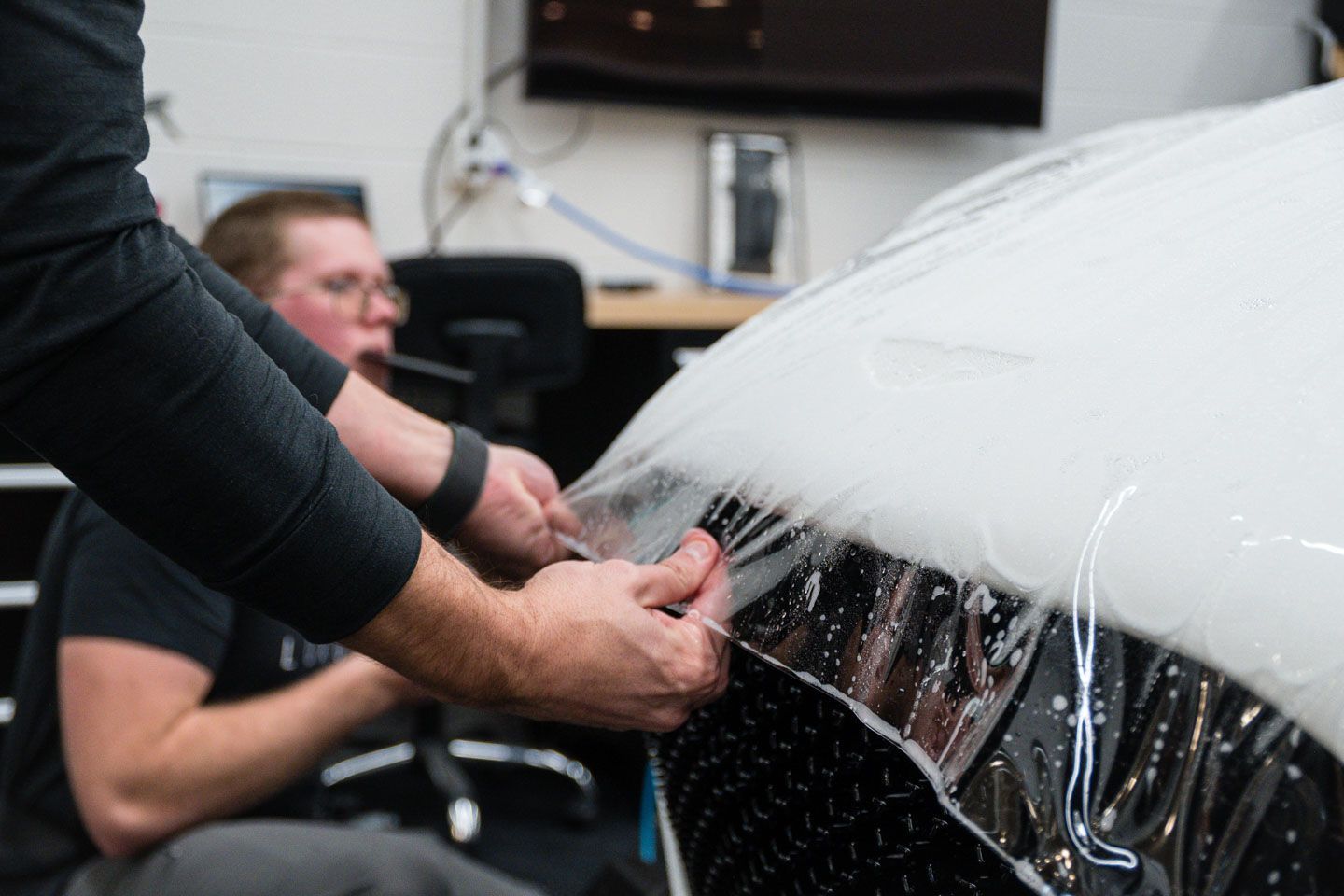
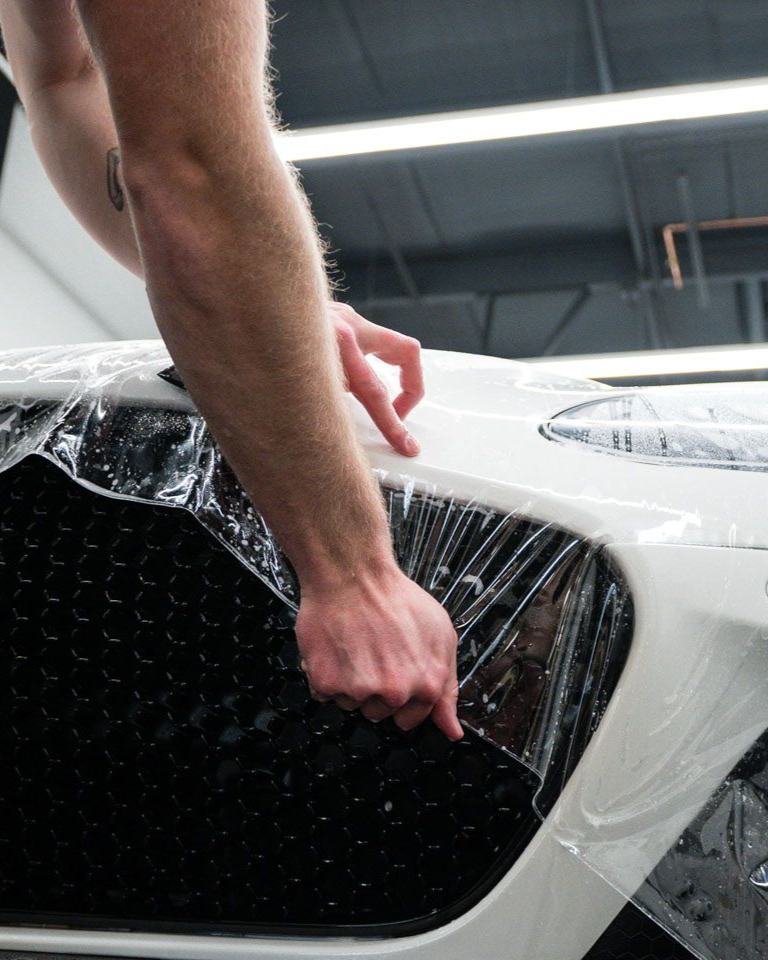
What actually happens is replacement, and replacement works by panel. Film is cut and installed one panel at a time: hood, front bumper, each fender, mirrors, rocker panels, A-pillars, door cups and edges. A scratch in the middle of a hood does not get a hood-sized patch over the scratch. The entire hood section is heated, lifted, removed, the adhesive residue is cleaned off, and a fresh piece is installed.
That is why the size of the mark has little to do with the size of the job. A two-inch scratch and a twelve-inch scratch on the same hood cost the same to put right. What changes the job is where the scratch sits. A mark that runs from a fender onto a door means two sections come off instead of one.
Removal is the part we would ask you not to attempt. Film wrapped around a panel edge has to come off at the right temperature and in the right direction, or it takes clear coat with it. That is a short job with the right tools and an expensive one without them.
What Not to Do to a Scratched Panel
- Do not use a razor blade on a lifting edge or a tear. You will score the paint underneath.
- Do not glue a lifting edge down. Adhesive that was not designed for the film sets hard, shows through, and makes proper removal harder later.
- Do not puncture a bubble with a pin. You have now turned a sealed defect into an open one that lets moisture in.
- Do not attack it with cutting compound or aggressive polish. Abrasives haze the topcoat permanently, and hazing the film is a worse outcome than the scratch you started with.
- Do not try to peel the film off yourself, even on a panel you intend to have redone.
Keeping New Scratches Off the Film
Most of the light scratching we see on film is put there during washing, which means most of it is preventable.
- Hand wash using the two-bucket method, one bucket for soap and one to rinse the mitt, so grit does not go back onto the panel.
- Use a pH-neutral soap and a clean microfiber wash mitt. Retire the mitt once it has been dropped.
- Stay out of automated brush car washes. The brushes are the single most common source of swirl marks on film, and they are hard on the edges.
- Keep a pressure washer back from the edges. Close-range spray at a seam is how lifting starts.
- Consider a ceramic coating over the film. It makes the surface slicker and easier to wash, which means less contact and less scratching. It is worth asking about at your next maintenance detail.
Look the film over every few months in good light, edges included. Catching a lifted edge early is a small job. Catching it after a season of moisture underneath is not.
Get a Straight Answer on Whether Your Film Needs Anything
A scratch on your film is not automatically a bill. Sometimes the answer is that the film is still doing its job and the right move is to leave it alone. We will tell you that if that is what we see.
If you would rather not guess, bring the car by. We will look at the panel with you, tell you which of the three tiers you are dealing with, and lay out the options if any work is needed.
Schedule an inspection or call us, and we will find you a time.
Frequently Asked Questions
Will a scratch on PPF go away on its own?
If it is in the topcoat, yes. Heat from sunlight or warm water lets the elastomeric layer reflow and close the mark. If it is deeper than the topcoat, it will not, no matter how long you wait.
Can you buff a scratch out of PPF?
No, and it usually makes things worse. Cutting compounds and machine polishes are abrasive, and abrading a self-healing topcoat leaves permanent hazing across a much larger area than the original scratch.
Does a scratch on the film mean my paint is scratched?
Usually not. The film absorbs the contact so the paint does not have to. The exception is a scratch that has cut all the way through the film, which you can identify by feeling for a break in the surface with a fingernail.
Is scratched PPF covered under warranty?
Rarely. Manufacturer warranties from XPEL, SunTek and 3M cover the film failing on its own, meaning yellowing, cracking, peeling, staining and delamination. They specifically exclude abrasion, scratching and impact damage from road debris.
Can one panel be replaced instead of the whole car?
Yes. Film is installed panel by panel, so a single hood, fender, bumper or mirror can be stripped and redone without touching the rest of the vehicle. A scratch that crosses a seam onto a second panel means both sections are replaced.
The Luxury Car Care