
How Ohio Road Salt Damages Car Paint and How PPF Protects Your Vehicle in Mason

Road salt does not eat through healthy paint. It gets in through chips and Scuffs that are already there, reaches the bare metal underneath, and corrodes it from the inside out. That is why preventing chips matters more than any product you spray on top.
It is a small distinction with a large consequence. Wax, sealant, and coatings sit on the surface and make salt easier to rinse away. None closes an opening that is already there. That gap is what most winter advice skips, and it is why
paint protection film in Mason, OH is worth understanding first.
Does Road Salt Actually Damage Car Paint?
Yes, but rarely by attacking a sound finish. Factory paint is a layered system, and cured clear coat holds up well against sodium chloride at winter temperatures. A car with no chips and no deep Scuffs can come through an Ohio winter fine.
The trouble starts wherever that system is broken. A stone chip on the hood, a scuff along a rocker panel, a Scuff on a door edge. Each gives salty water a path to bare steel, and once salt reaches metal, it holds that surface wet long after the road dries.
The industry tests for exactly this. SAE J2334, the cosmetic corrosion standard used to validate automotive coatings, has technicians cut a line through the paint before exposing the panel to salt, then measures how far corrosion creeps from that cut. The cut is the point.
It also means the damage you see lags the damage happening. Corrosion travels outward under the paint and surfaces as a blister, not a stain. By the time a panel bubbles, the metal below has rusted a while.
Ohio Salts Its Roads Before the Snow Arrives
Most drivers assume their car picks up salt during a storm. In Ohio, it picks it up first.
The Ohio Department of Transportation pretreats roads with liquid brine, sprayed on dry pavement ahead of a storm so ice cannot bond. ODOT mixes that brine itself at roughly 23 percent salt to 77 percent water. The practice is called anti-icing, and it is standard statewide. It also means your vehicle carries salt before the first flake falls.
The volumes are not small. During a single February 2026 storm, ODOT reported using 111,725 tons of salt and 1.5 million gallons of deicer statewide, according to figures the agency gave Spectrum News 1. Cincinnati held around 17,000 tons of salt plus 45,000 gallons of brine that same week.
Brine is also harder on a vehicle than rock salt. Rock salt bounces and scatters. Brine wets the surface, wicks into panel seams and drain channels, and dries into a residue that pulls moisture back out of humid air days later. Contact time drives corrosion, and brine is built to stay put.
Where Salt Damage Shows Up First on a Mason Driver's Car
It starts low, in the places nobody checks:
- Rocker panels and lower door edges, which catch spray off your own tires
- Wheel wells and arches, where packed slush sits against seams for days
- The hood's leading edge and front bumper, which take the most chips at highway speed
- Door and hatch drain holes, which trap salty water once grit clogs them
- Any chip you have been meaning to deal with, where corrosion actually starts
A second list matters more and rarely appears in articles about paint. Salt also attacks the undercarriage, frame, brake lines, and exhaust, none of them painted panels. When NHTSA closed an investigation into corroded brake pipes, complaint rates in the states it designates as salt states ran far higher than the rest of the country.
Salt Needs Three Things to Damage Your Car
Corrosion is not one event. It needs three conditions at once: an opening in the finish, salt, and moisture. Remove any one and the sequence stops. Each is removed by a different thing, and only one stays removed.
Washing removes the salt, until the next drive
A wash resets how long salt has been sitting against your paint, and cumulative contact time drives corrosion. It is the most effective thing you can do, and temporary by design. Two days later, after the brine trucks run again, you are back where you started.
Drying and shelter limit the moisture, with one trap
Salt in dry conditions is relatively harmless. Moisture activates it. That makes a garage sound like the answer, until you park a salty, wet car in a heated one. The slush melts, the salt stays, and the metal sits damp overnight at a temperature where corrosion moves faster. Rinse before you park, not after.
Only one of the three stays removed while you are at work
Your car spends the day parked somewhere you are not, carrying whatever the commute put on it. You cannot wash it hourly or control the weather. You can close the opening permanently, so when salt and moisture line up, there is nothing to get into. Chip repair does that for damage that exists. Film does it for damage that has not.

What Paint Protection Film Actually Does About Salt
The claim worth making is narrower than most: paint protection film is a chip prevention product, and preventing chips prevents salt damage.
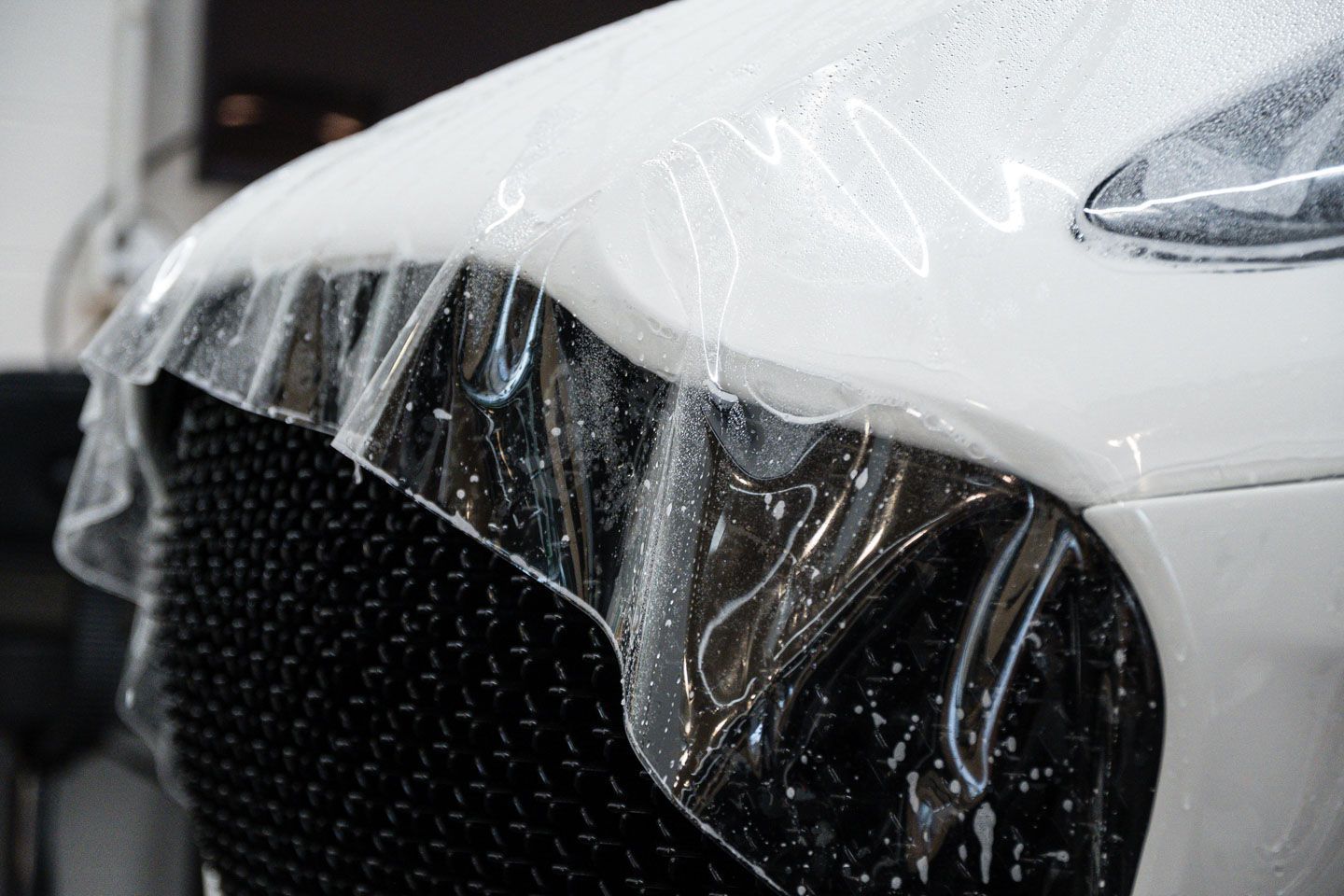
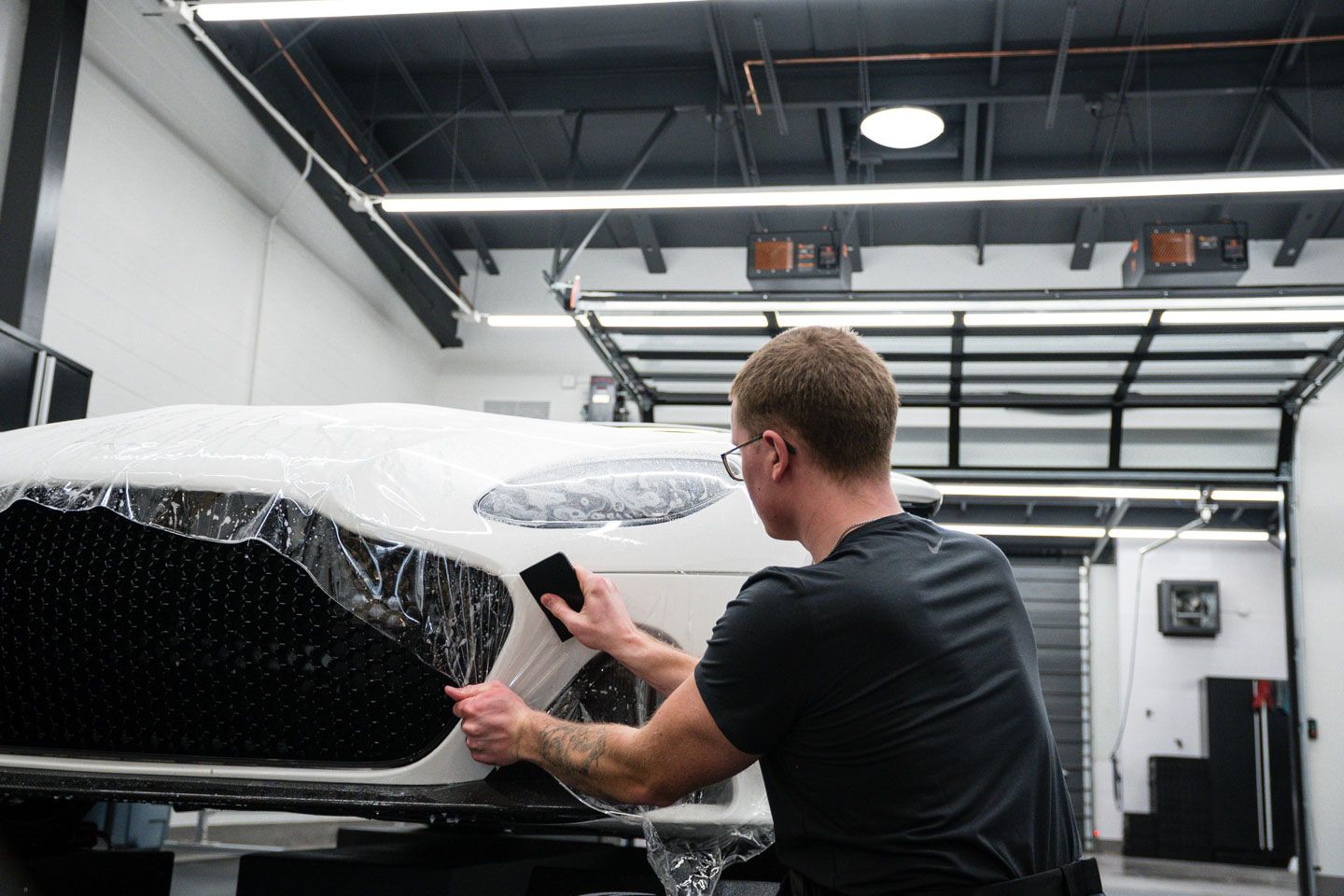
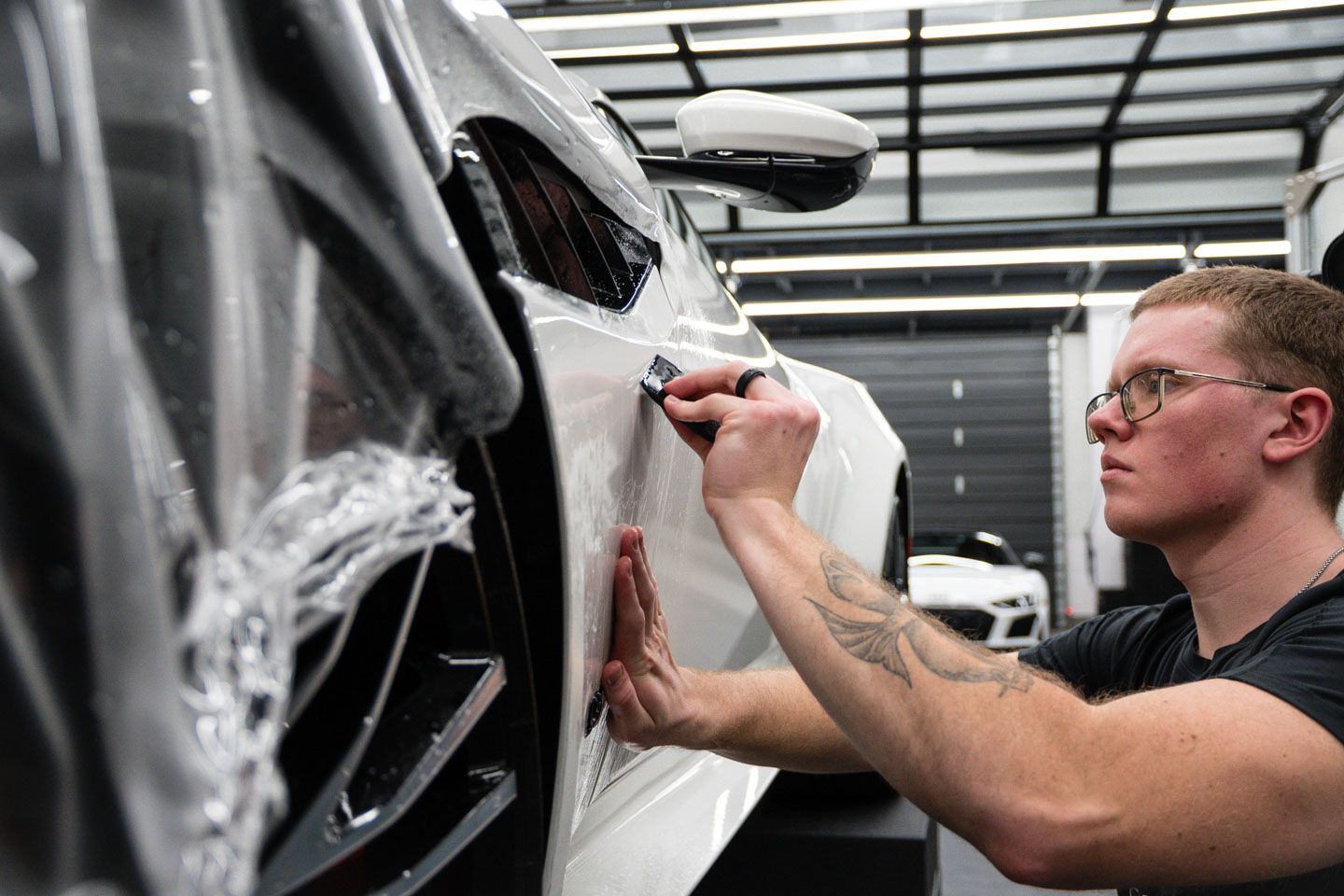
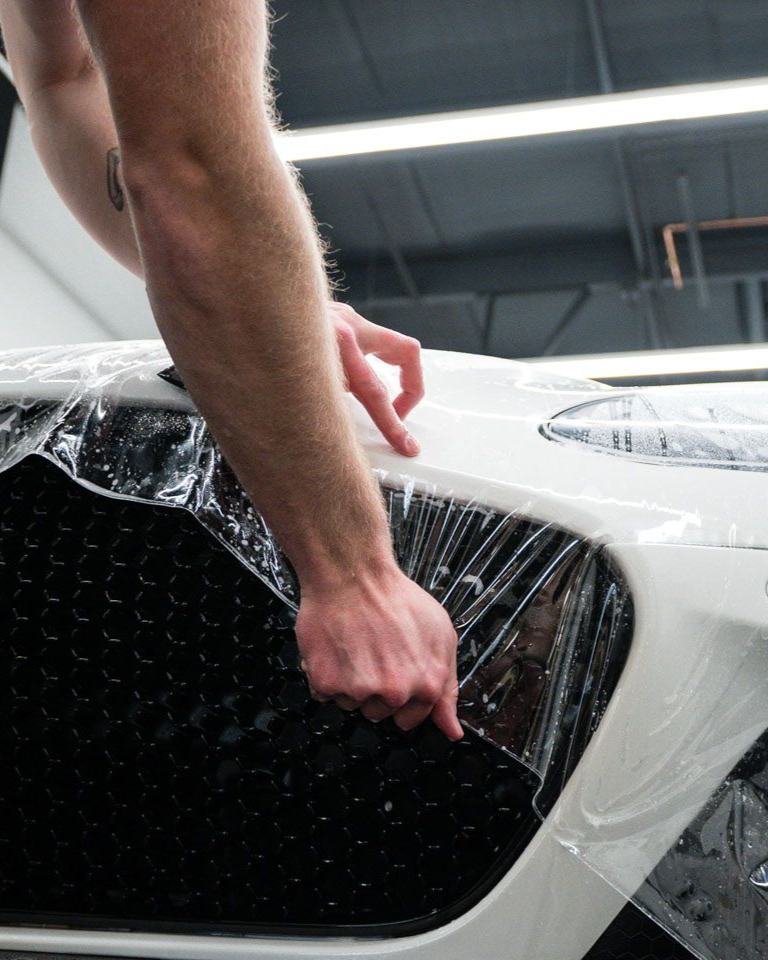
The film is thermoplastic polyurethane, a thick, flexible, clear layer over your paint. When a stone comes off a truck tire on I-71, it hits the film instead of your clear coat, and your paint stays sealed. That is the whole mechanism, and against road salt it is the one that counts. The SunTek paint protection film we install in Mason is built for that job.
Secondary properties help. The self-healing topcoat lets light swirls disappear with heat, though deeper cuts do not fully recover, which we cover in how self-healing PPF handles Scuffs. The surface also resists staining from salt film, bug residue, and road tar.
Coverage is where the decision gets made. For a Warren County commuter on I-71, the panels that earn film are predictable: front bumper, hood, mirrors, and the rockers that catch tire spray. Our Partial Protection package starts at $900, Full Front at $1,500, and the Full Front with Track Package at $1,900.
That last one adds rocker panels and impact rear fenders, which usually makes it the right call for a salted highway commute. Our guide to full front versus full body coverage covers the trade-offs.
What PPF Does Not Protect, and Why That Matters in Winter
Film goes on painted panels. It does not go on your undercarriage, frame, brake lines or exhaust, and that is exactly where salt-related corrosion concentrates. Any shop telling you film solves road salt is selling something it does not do.
Practically: no coverage package replaces winter washing. Plan on a wash every ten to fourteen days through salt season, with an undercarriage spray, because that is the part film cannot reach. Federal regulators urge salt state drivers to rinse undercarriages through winter and again in spring.
One more thing before you budget: insurance will not help. Standard policies treat rust and corrosion as wear and tear, so gradual salt damage is excluded even on full coverage. Factory rust-through warranties pay for perforation, not corrosion that started at a chip nobody sealed. It is a maintenance problem, which is the honest argument for getting ahead of it.
Film Goes On Before the Chips, Not After
Paint protection film is transparent. Every defect underneath stays visible, and anything already corroding keeps corroding, now sealed under a layer you cannot reach. Applying film over an active chip is worse than applying nothing.
So your paint's condition decides the order of operations:
- Clean, chip-free paint goes straight to film
- Light swirls and marring get paint correction first, so the film goes over a finish worth preserving
- Chips that reach bare metal get sealed before any film goes on
- Bubbling or lifting paint means corrosion is already spreading underneath, and that is a body shop conversation first
It also sets the season. The best window in Ohio is early fall, on clean prepped paint, before the first brine truck runs. Film installed in February protects whatever damage January already did. For what to expect afterward, see how long paint protection film lasts.
PPF, Ceramic Coating, or Both
These get compared as competitors when they solve different halves of the problem:
- Ceramic coating cross-links with your clear coat, makes salt film far easier to rinse off, and adds gloss. It does not stop a stone chip, because it is a coating and not a cushion
- Paint protection film absorbs the impact and closes the opening, though it will not cover a whole vehicle at a sensible cost
- Wax and sealant are sacrificial and seasonal, measured in weeks, not years
For an Ohio winter, film on the high-impact panels is the priority, because the chip is the failure point. The combination we recommend most often is film on the front end and rockers, with a ceramic coating over the top and across the uncovered panels. It makes the wash cadence above far less of a chore.
Your Winter Paint Routine in Greater Cincinnati
- Wash every ten to fourteen days through salt season, with an undercarriage rinse
- Rinse loose grit off before any contact wash so it is not dragged across paint
- Wash above freezing and dry the door seals, jambs, and locks afterward
- Rinse before parking in a heated garage, never after
- Give the car one more wash in spring, because leftover deposits keep working
- Walk the lower panels monthly, looking for brown edges or lifting paint
If your vehicle already has film, our notes on maintaining your paint protection film cover what to avoid around the edges.
Get Ahead of Salt Season Instead of Repairing It
Luxury Car Care was founded in Mason in 2020 by a former engineer turned professional detailer, and that background shows in how we approach a job like this. We inspect the paint before quoting the film, tell you which panels your driving actually justifies, and say so when correction or chip repair should come first.
If you want film on before the brine trucks start running, early fall is the window. Call or text (513) 544-4254, or request a free quote and we will build a plan around your vehicle and your commute.
Frequently Asked Questions
Does road salt damage car paint in one winter?
It can, but usually only where the finish is already broken. A chip left open through one Ohio winter can show surface rust by spring, while undamaged paint on the same panel comes through fine.
Does PPF protect against road salt?
It protects your paint from the chips that let salt reach bare metal, which is how salt damage begins. It does not protect your undercarriage, frame or brake lines, so it is part of a winter strategy, not all of it.
Can you put paint protection film over an existing chip or Scuff?
You should not. The film is clear, so the defect stays visible, and any corrosion underway continues where you cannot reach it. We inspect the paint first and recommend correction or chip repair where it is needed.
Is it worth washing your car in winter if the roads get salted again in two days?
Yes. Every wash resets how long salt has been sitting against your paint and undercarriage, and total contact time drives corrosion. Partial protection repeated often beats perfect protection once.
Where can I get paint protection film installed near Mason, OH?
Our shop is at 4234 Mason Pointe Dr in Mason, open Monday through Friday, 8:30 AM to 5:30 PM by appointment. We also serve greater Cincinnati, including paint protection film in West Chester, OH, Blue Ash, Sharonville, and Springboro.
The Luxury Car Care