
Why Fall Is the Best Time to Install Paint Protection Film Before a Cincinnati Winter

By the time the first flakes fall in the Cincinnati area, the brine trucks have usually made a pass already. City crews pre-treat streets with salt brine ahead of storms, and the National Weather Service puts the average first measurable snowfall in Cincinnati around November 29. Every mile after that sends salt, sand, and gravel at your front end and lower panels.
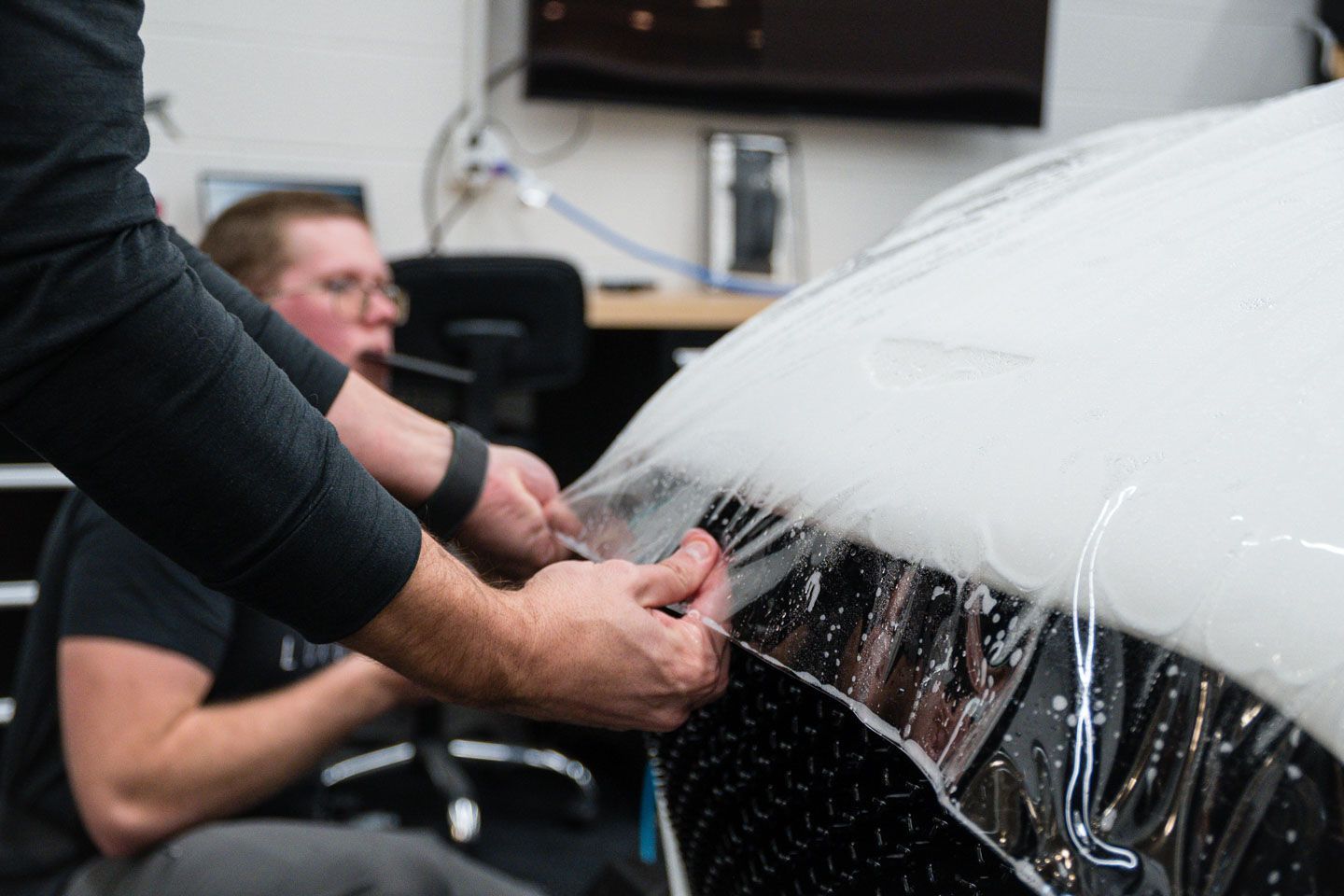
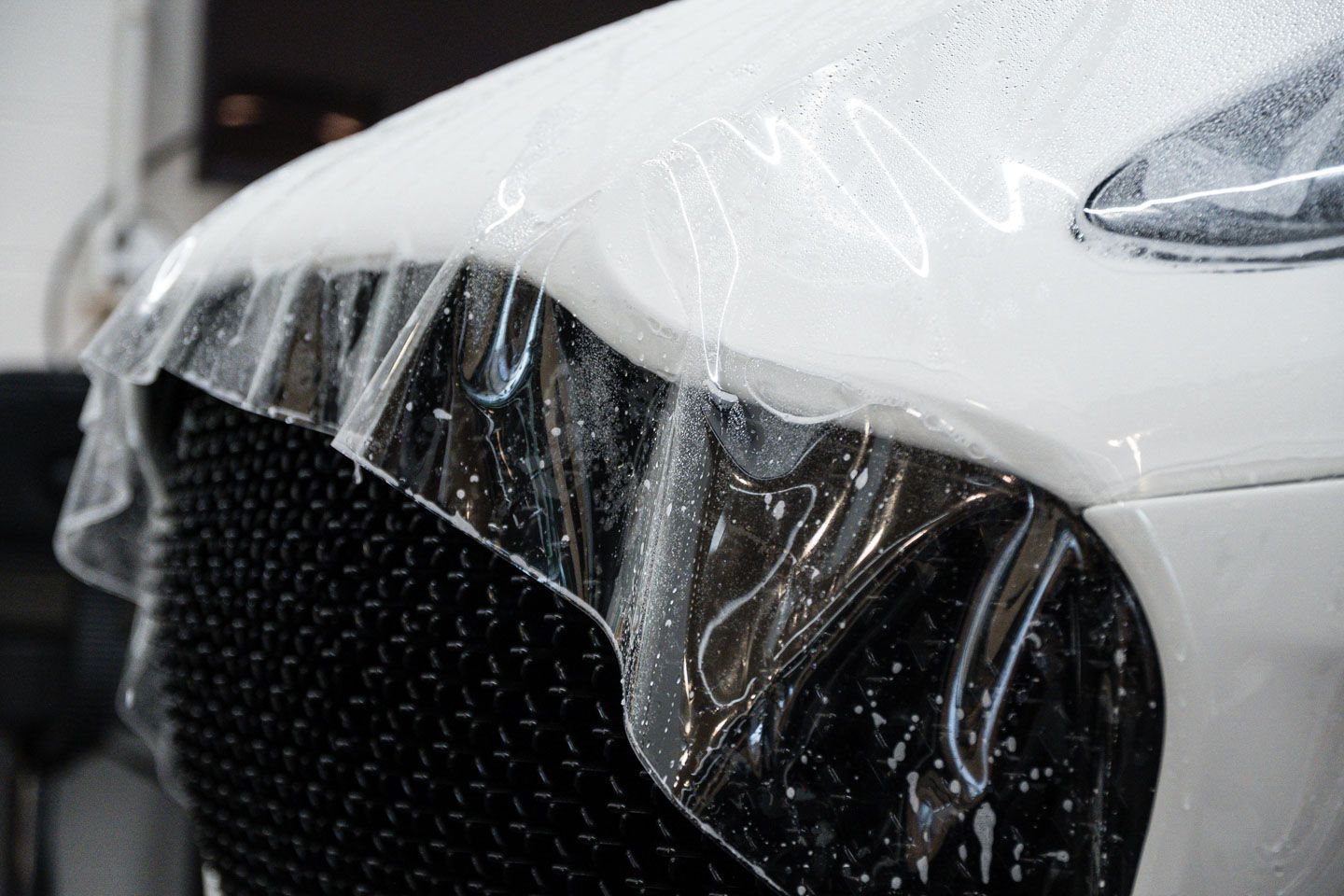
If you're wondering about the best time to install paint protection film, the answer for drivers here is fall. Installing PPF in September, October, or early November gives the film time to settle onto paint that is still in good shape, before winter roads get a chance to damage it. Here's why the timing matters, which areas to cover, and how to plan your appointment.
What a Cincinnati Winter Does to Unprotected Paint
Cincinnati's winter road program is built to keep streets passable, and it does that job well. According to the City of Cincinnati, crews most often pre-treat streets with salt brine, a mix of salt and water. When temperatures are above 17°F, they spread salt. Below 17°F, during ice storms or when snow piles up, they add calcium chloride to the salt. Plows come out once several inches fall, with the goal of making streets passable within 24 hours of the last snowfall.
The City started the 2024-25 season with 27,000 tons of salt and 48,000 gallons of salt brine, and that covers City streets only.
All of that keeps you moving. It also means your car spends months driving through a mix that is hard on paint.
- Salt and brine cling to the lower panels and work their way into the edges of existing chips.
- De-icing chemicals left sitting on the surface can etch the clear coat.
- Sand, gravel and plow debris get kicked up by the cars ahead of you and chip the bumper, hood and mirrors.
- Freeze-thaw cycles throw loose debris onto the road and widen chips that are already there.
- Ice scrapers and snow brushes leave fine scratches.
- Cold weather means fewer trips to the car wash, so contaminants sit on the paint longer.
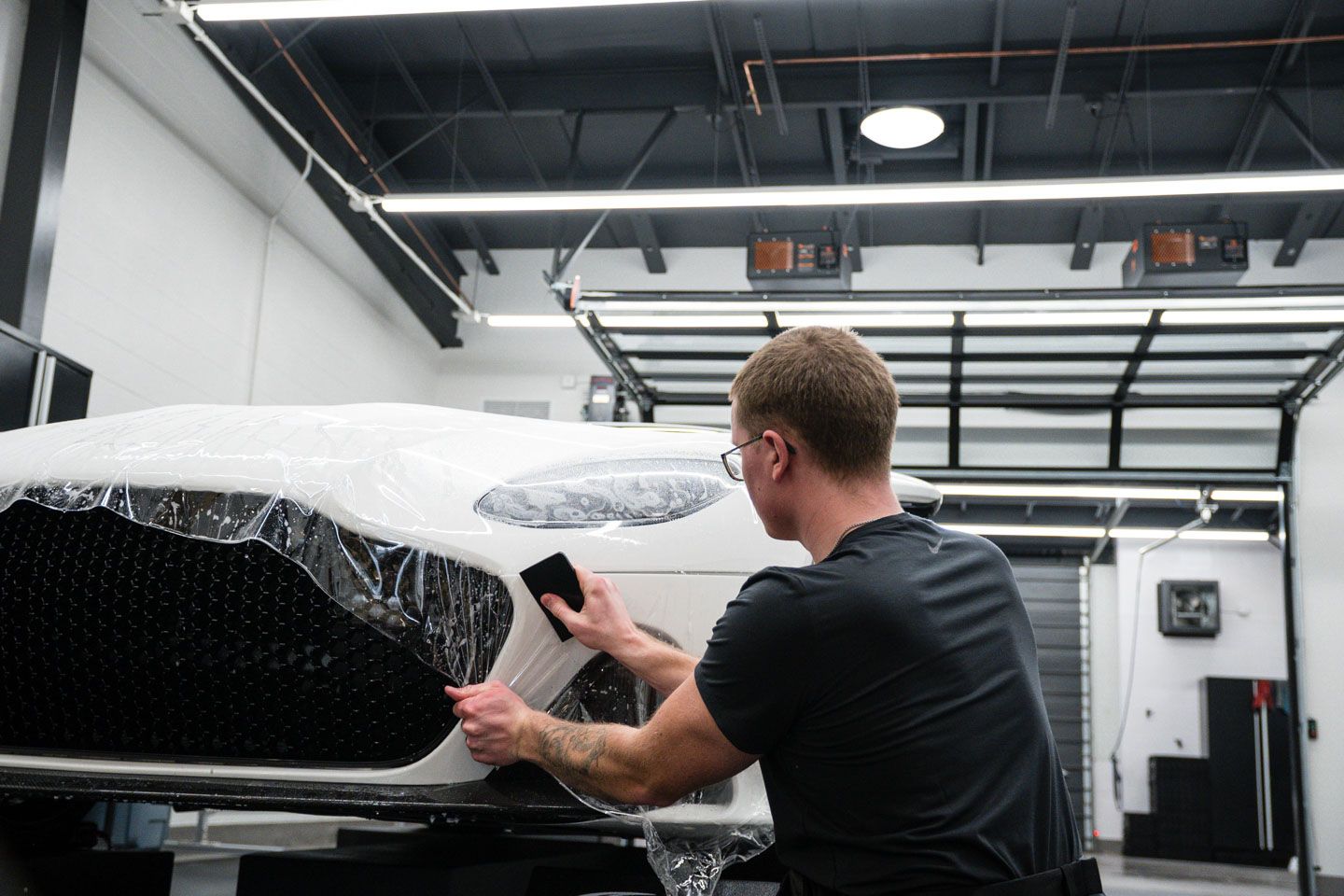
A small chip that opens up in January can be a bigger problem by March. That is where paint protection film comes in. PPF is a clear urethane film that takes the hits from road debris and keeps salt and brine off the paint underneath.
Why Fall Is the Best Time to Install PPF
Paint protection film can go on at any time of year, but the weeks between the end of summer and the first snow line up better than any other window. Here's why.
The Film Bonds Before the First Salt Goes Down
PPF doesn't reach full strength the moment the installation is finished. The adhesive needs time to bond with the paint, and any moisture left under the film needs time to work its way out. Cold weather slows both. DaVinci, a paint protection film brand, notes that a cure that normally takes about a week can stretch to two or three weeks in freezing conditions. Installing in fall lets the film settle in during mild weather, so it is fully set before the first brine truck rolls.
Your Paint Is in Its Best Shape After Summer
PPF seals in the condition of whatever is underneath it, so the cleaner the paint, the better the result. After summer, most cars need only a thorough wash and decontamination before film goes on. After a winter of salt, sand, and scraping, paint often has new chips and swirl marks that should be fixed first, which can mean paint correction before installation. Protecting your paint in fall means sealing in a good finish instead of restoring one later.
Fall Temperatures Suit a Clean Installation
Temperature affects how film handles and how well it sticks. SunTek's technical data for its paint protection film lists an installation environment of roughly 60 to 90°F. Mild fall days make it easier to keep the car, the film, and the workspace in that range, and fall usually brings lower humidity than a Cincinnati summer.
You Beat the Spring Rush
Many drivers wait until spring to protect a car, usually after winter has already left its mark. That pushes a lot of appointments into the same stretch of weeks when everyone is cleaning up from the season. Booking in fall gets your car in ahead of that rush and keeps it protected through the months that do the most damage.
When to Book Your Fall PPF Appointment
The sweet spot for fall installation runs from September through early November. Two dates help frame that window.
- The average first freeze in the Cincinnati area arrives around October 25, according to FOX19. After that, cold nights become more common.
- The average first measurable snowfall comes around November 29, according to the National Weather Service in Wilmington, and the first 1-inch snowfall averages December 15, based on 1981 to 2010 data.
Averages aren't guarantees. The National Weather Service's records, which go back to 1893, show the earliest measurable snow on October 19, 1989, when 5 inches fell. The safest plan is to book early in the window rather than waiting for the forecast to turn. If you're thinking about protecting your car this year,
contact us, and we'll help you find a date that works.

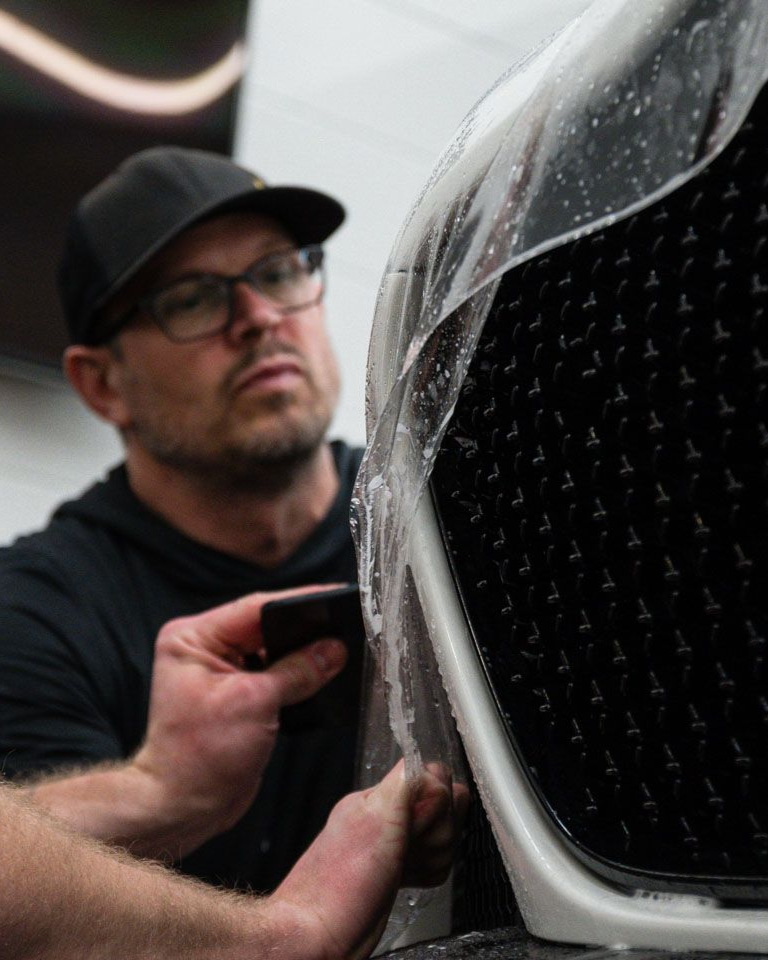
Which Areas to Protect Before Winter
Winter damage isn't spread evenly across a car. The front end takes rocks and debris head-on, and the lower panels take the salt spray and slush thrown off the tires. Our paint protection film packages are built around those zones.
- Partial Protection covers the front bumper, part of the hood, the mirrors, part of the front fenders, and the headlights.
- Full Front, our most popular package, covers the front bumper, the full hood, the mirrors, the full front fenders, the headlights, and the fog lights.
- Full Front with Track Package builds on Full Front by adding the rocker panels and extra coverage toward the rear of the car.
- Full Car covers every painted surface and is also available in matte and color-change film.
For winter driving around Cincinnati, Full Front with Track Package is a strong middle ground because it protects both the impact zone up front and the low panels that sit in the path of salt and slush. If you want every painted surface covered, including the sides and rear that collect brine all season, Full Car is the most complete option.
We also offer windshield protection film, which helps guard the glass against the same gravel and debris that hit your hood. Not sure which coverage level fits your car and your driving? Our guide to full front vs. full body PPF walks through the trade-offs.
Choosing the Right SunTek Film
We install SunTek paint protection film, and each film in the lineup suits a different priority.
- SunTek Reaction uses SunTek's Tetrashield technology for self-healing and super hydrophobic performance. It carries a 12-year manufacturer's limited warranty.
- SunTek Ultra self-heals with heat from the engine or the sun and has a HydroResist top coat. It carries a 10-year manufacturer's limited warranty.
- SunTek Ultra Defense is a thicker film designed for the best chip resistance in the lineup, with a 10-year manufacturer's limited warranty.
- SunTek Ultra Matte gives your paint a matte look along with the same protection, also backed by a 10-year manufacturer's limited warranty.
If you log a lot of winter highway miles, Ultra Defense's extra thickness is worth a look. SunTek says its film helps protect paint in "excessive heat and frigid cold," so the choice usually comes down to finish, chip resistance, and budget. Certain warranty restrictions apply, so ask us for the details on any film you're considering.
What PPF Does Not Do
Paint protection film is strong protection, but it helps to be clear about its limits.
- It doesn't protect against collision damage. A fender bender will still dent the panel under the film.
- It isn't a substitute for washing. Salt and grime still need to come off the film on a regular schedule.
- Ceramic coating isn't a replacement for it. SunTek notes that ceramic coatings don't offer the same rock chip protection as PPF. A coating adds gloss and makes cleaning easier, and ceramic coating can be applied over PPF if you want both benefits.
Caring for PPF Through a Cincinnati Winter
A little routine care keeps your film clear and working all season.
- Rinse road salt off regularly, paying extra attention to the lower panels where brine builds up.
- Hand wash whenever you can. SunTek recommends soap, water and a soft cloth, and it advises against automatic car washes and power washing because they can lift the film's edges. Skip brush washes entirely.
- Don't scrape ice off film-covered surfaces. Let it melt off as the car warms up instead.
- Check the film's edges after big storms, and let us know if anything starts to lift.
For more, see our tips for maintaining paint protection film.
Protect Your Paint Before the First Snow
A Cincinnati winter is hard on paint, and the best time to protect it is before the salt goes down. Luxury Car Care has served drivers from our shop in Mason since 2020, along with nearby communities like West Chester and Blue Ash, and our trained and certified installation team works with the full SunTek lineup.
Get a quote or call or text us at (513) 544-4254 to book your fall appointment. We're open Monday through Friday, 8:30 AM to 5:30 PM, by appointment only.
Frequently Asked Questions About Fall PPF Installation
Is fall really the best time to install paint protection film in Cincinnati?
For most drivers, yes. Fall gives the film time to bond in mild weather, lets you protect paint that is still in good shape after summer, and gets the car covered before salt and brine go down. It also keeps you ahead of the spring booking rush.
How long does PPF take to cure?
PPF takes several days to cure as the adhesive bonds to the paint, and cold weather slows that process down. Ask us about aftercare when you book, including when it's safe to wash the car for the first time.
Can PPF be installed in cold weather?
Yes, as long as the work is done in a controlled indoor environment. The adhesive bonds more slowly in the cold, though, so the cure takes longer. That's one more reason to schedule in fall.
Does PPF protect against road salt?
Yes. The film puts a physical barrier between your clear coat and salt, brine and de-icers, and it absorbs the gravel and sand impacts that would otherwise chip the paint and let salt in. You still need to rinse salt off the film regularly.
Should I add ceramic coating over PPF before winter?
It's a good pairing. Ceramic coating can be applied over paint protection film to add gloss and make salt and grime easier to wash off, and we especially recommend it when only the front of the car is covered with film. Ask us about scheduling both when you book.
How long does SunTek PPF last?
SunTek backs Ultra, Ultra Defense, and Ultra Matte with 10-year manufacturer's limited warranties and Reaction with a 12-year manufacturer's limited warranty. Certain restrictions apply. Our post on how long paint protection film lasts covers what affects its lifespan.
Which package is best for winter driving?
Full Front with Track Package is a strong choice because it adds the rocker panels, which take a beating from salt and slush. Full Car is the most complete option if you want every painted surface covered.
When should I book a fall PPF appointment?
Aim for September through early November. That window gives the film time to settle before the average first measurable snowfall in late November.
The Luxury Car Care