
How Ceramic Coating Helps Your Car Shed Ohio Road Salt and Brine in Winter

Ceramic coating helps your car shed road salt and brine by giving the paint a slick, water-repelling layer that salt struggles to bond to. Salt, slush, and road film rinse off with less scrubbing. A coating does not stop rock chips or protect the undercarriage, so regular washing still matters.
In southwest Ohio, crews spray brine on the roads before a storm and spread salt after it. If you commute on I-71, I-75, or I-275, your lower panels can wear a white film by midweek. At Luxury Car Care, we coat cars in Mason so that film washes off instead of settling in.
What Ohio Road Salt and Brine Do to Your Paint
Road salt and brine cling to paint and metal, hold moisture against the surface, and speed up corrosion when they are left sitting. Dried salt film also dulls the finish.
Ohio roads are treated with three main materials:
- Rock salt: sodium chloride, spread after snow falls
- Colder-weather blends: calcium chloride and magnesium chloride, which keep working at lower temperatures than rock salt
- Brine: salt dissolved in water and sprayed on roads before a storm, which clings and dries into a white film
Salt collects in the same places every winter:
- Lower doors and rocker panels
- Wheel wells and the areas behind the bumpers
- Panel seams and trim edges
- The undercarriage, including the frame, brake lines, fuel lines, and suspension
Ohio's freeze and thaw cycles make this worse. Damp air and melting snow wet dried salt again, and each cycle gives it another chance to work on exposed metal.
How Ceramic Coating Helps Salt Slide Off
Ceramic coating helps salt slide off by giving your paint a slick, low-energy surface that salt and grime struggle to grip. Instead of bonding to the clear coat, salt, slush, and road film sit on top of the coating and rinse away with less effort.
A ceramic coating is a liquid, SiO2-based product that cures into a hard, glass-like layer on the clear coat. Three of its properties matter in winter.
A Hydrophobic Layer
A hydrophobic surface makes water bead up and sheet off instead of spreading out and sitting on the paint. The runoff carries much of the salt with it, and a rinse removes most of the rest.
Chemical Resistance
A cured coating sits between road chemicals and your clear coat. Salt film lands on the coating instead of the paint, which buys you time between a salty commute and the next wash.
Faster, Gentler Washes
Less grip means less scrubbing, and less scrubbing over gritty salt film means fewer wash scratches through winter.
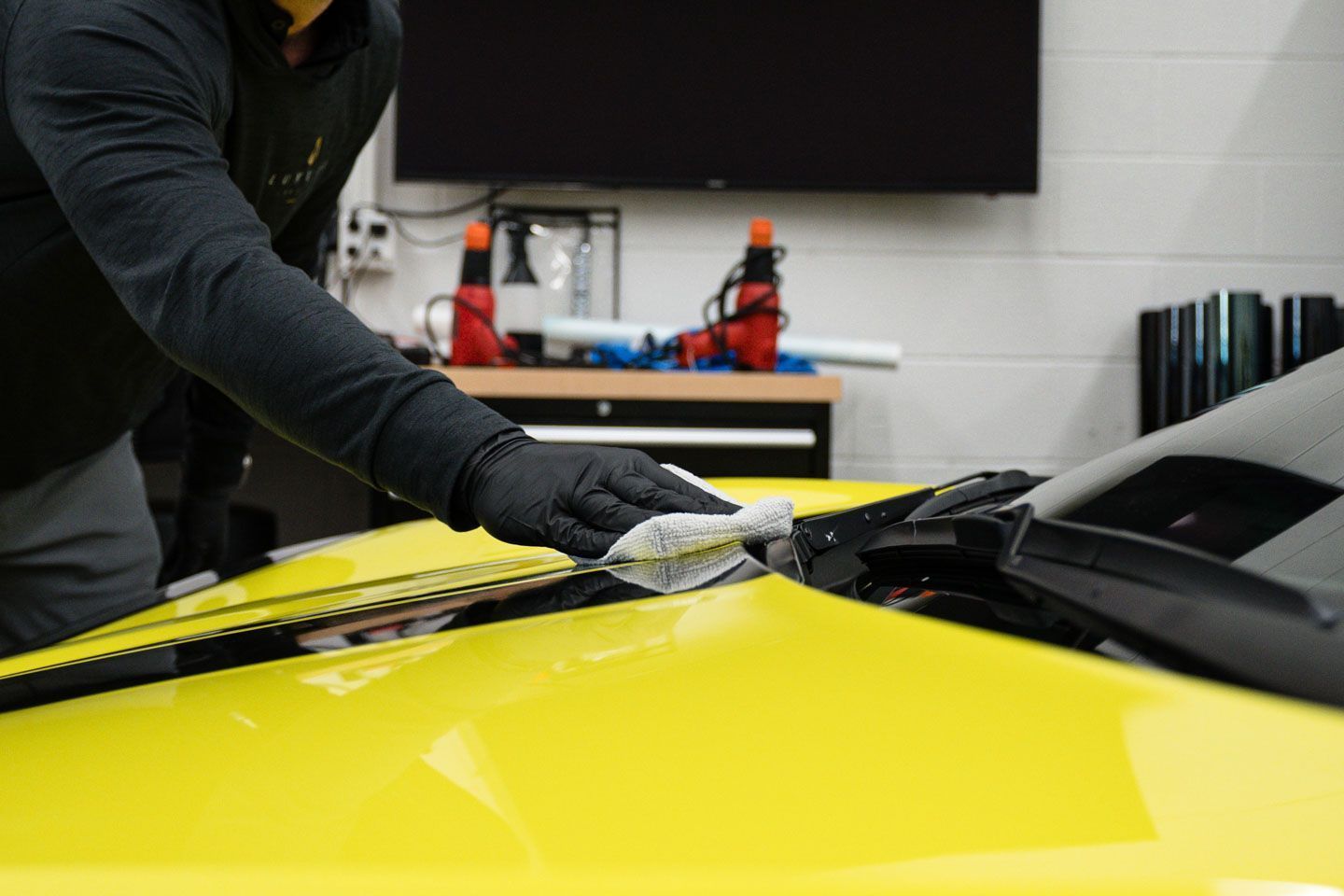
If you are considering ceramic coating in Mason or a nearby city, keep in mind that the coating only works as well as the surface under it. A coating locks in whatever it is applied over, so the paint needs to be washed, decontaminated, and ideally corrected first. That is why our coating packages start with a full exterior wash and paint decontamination.
Why Your Coating Might Look Like It Stopped Working
Your coating most likely has not stopped working. A layer of salt, brine, and road film is sitting on top of it and hiding the beading.
A cured coating holds up in cold temperatures. Traffic film and dried salt cover it like a dirty skin, so water lands on that film instead of the slick layer underneath.
Signs that road film is the problem:
- Water sheets across the panel instead of beading
- The paint feels rough to the touch
- The gloss looks flat or hazy, especially on the lower half of the car
A proper wash usually brings the beading back. If it does not, a decontamination step lifts the bonded grime and lets the coating behave the way it did before.

What Ceramic Coating Won't Do in Winter
A ceramic coating will not make your car immune to winter. It helps salt release from the paint, but four jobs fall outside what it can do:
- It won't stop rock chips. Highway gravel can still chip the paint.
- It won't protect the undercarriage. Coatings go on painted body panels, wheels, and glass, not the frame, brake lines, or suspension underneath.
- It won't stop rust that has already started. A coating cannot reverse corrosion that has already begun.
- It won't replace washing. Salt still has to be rinsed off. The coating just makes that faster.
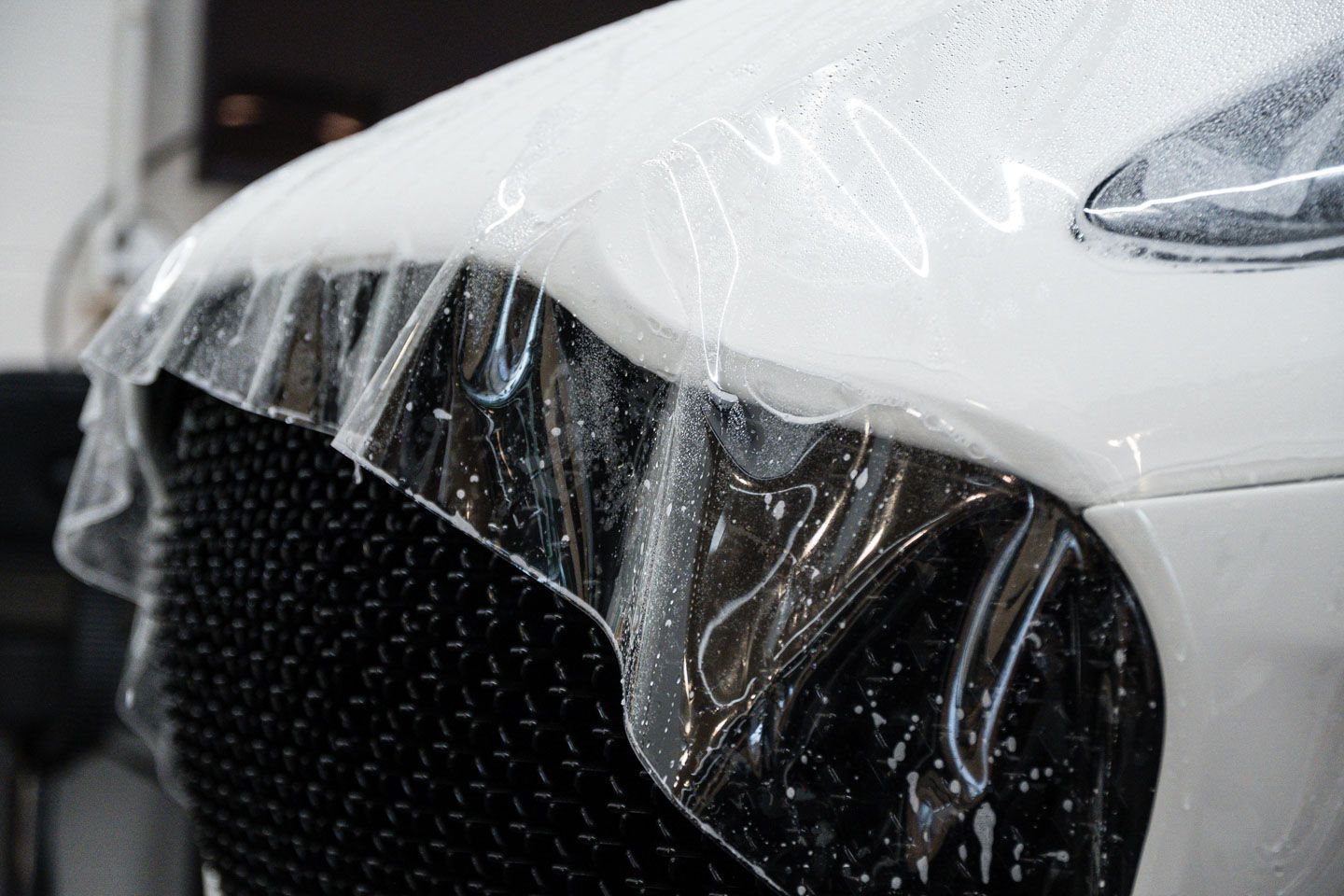
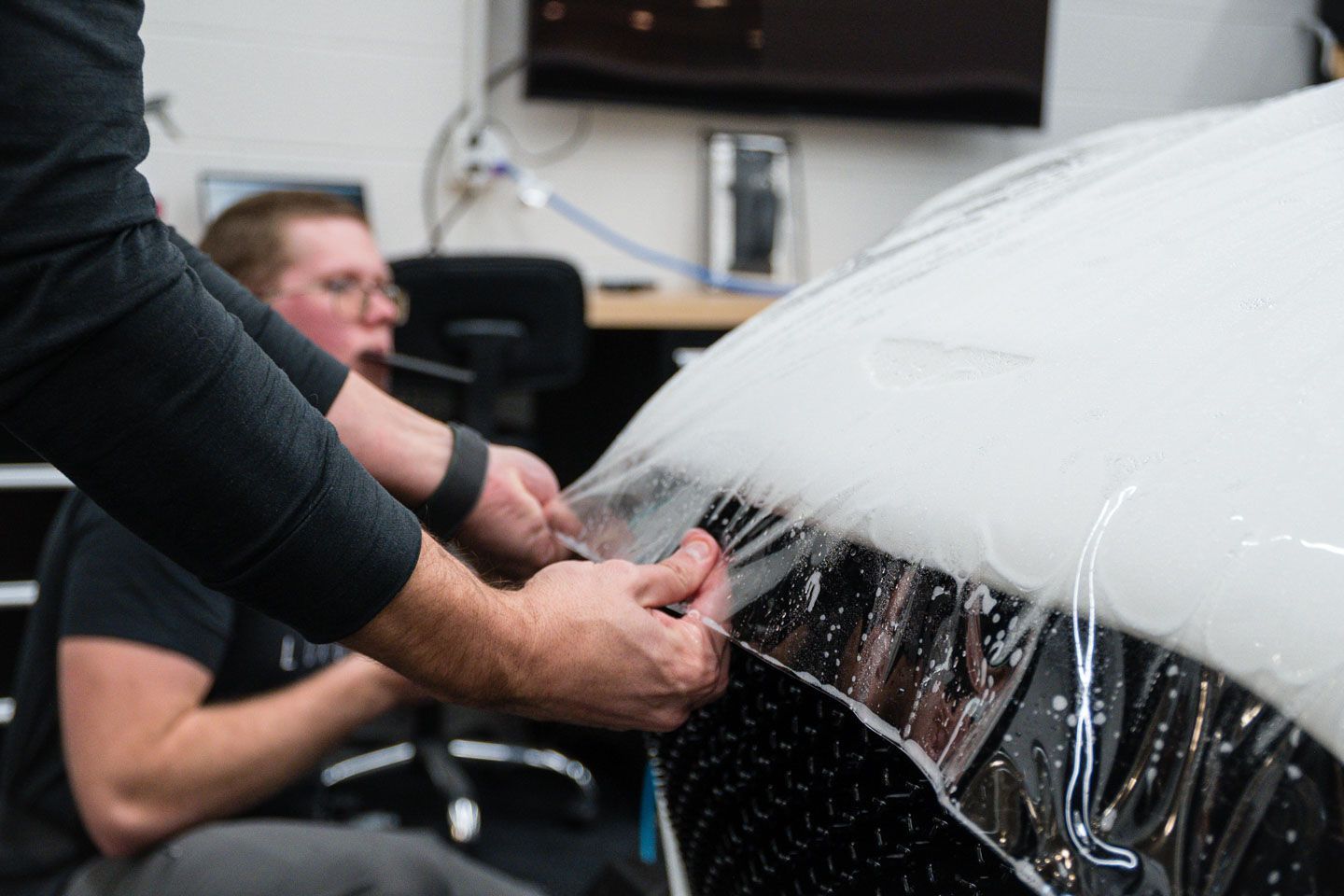
For chip protection on the hood, bumper, and fenders, paint protection film adds a physical layer. Pairing film on high-impact areas with a coating on the rest of the car covers both chips and chemical film.
How to Wash a Ceramic Coated Car in an Ohio Winter
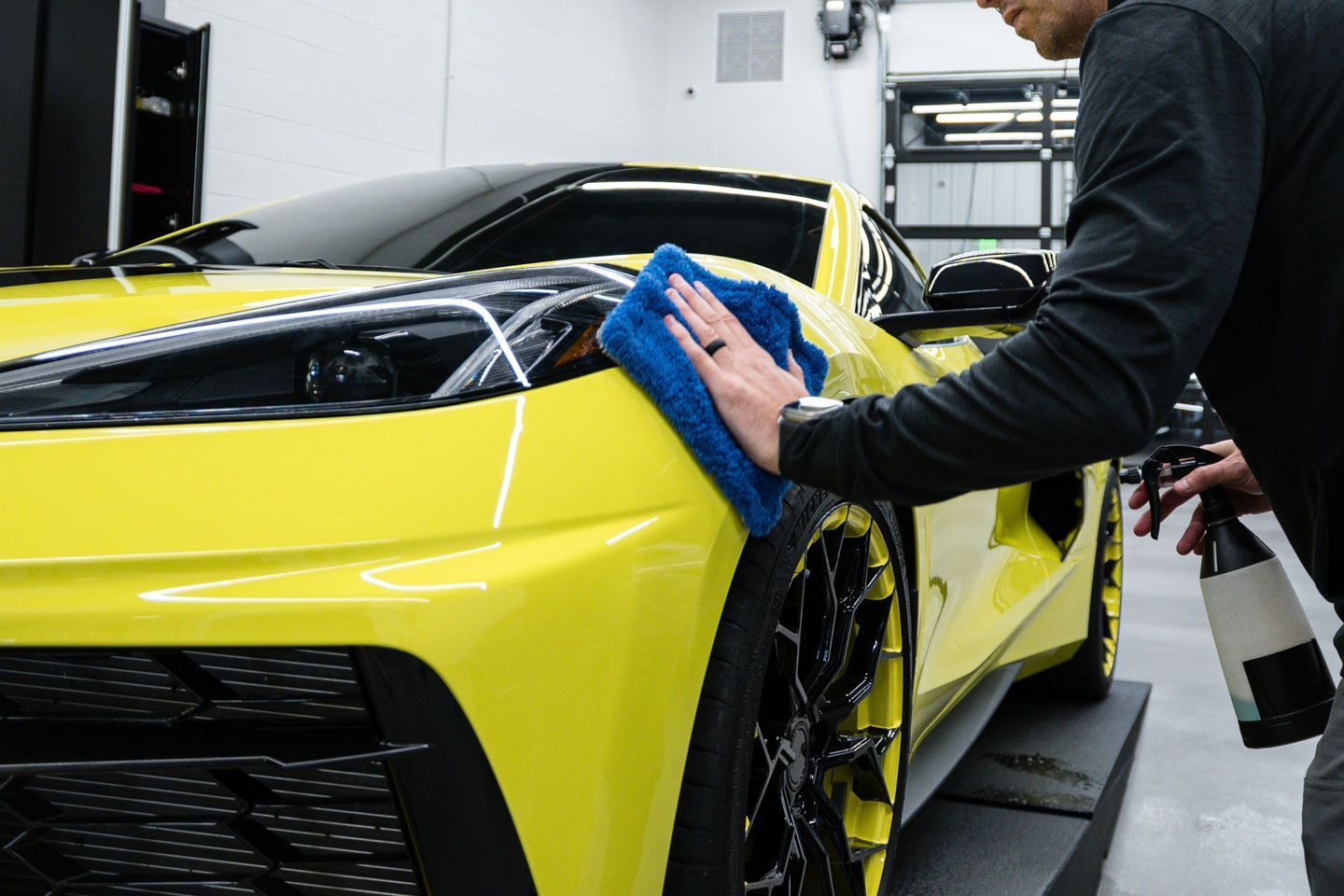
Wash a ceramic-coated car every 1 to 2 weeks during salt season, using a pH-neutral soap and a gentle hand wash that pays extra attention to the lower panels.
- Wash every 1 to 2 weeks in salt season, and soon after heavy salt days or a run of brined roads.
- Pick a day above freezing when you can, so water does not freeze on the paint, in the door seals, or in the locks.
- Pre-rinse or foam the car and let it dwell for a few minutes to loosen salt before anything touches the paint.
- Use a pH-neutral soap and a gentle contact wash with a clean mitt, working from the top down.
- Rinse the lower panels, wheel wells, and underbody thoroughly, since that is where salt and brine build up most.
- Dry the car with a clean drying towel to avoid water spots and frozen door seals.
- Skip automatic car washes. Brush and soft-touch washes can leave fine scratches, and harsh chemicals wear a coating down early.
Follow the aftercare instructions we give with your coating. Reaching its full rated lifespan depends on proper maintenance.
Ceramic Coating vs Wax for Ohio Winters
Ceramic coating holds up far better than wax through an Ohio winter. Wax wears down quickly with cold, salt, and road chemicals and needs frequent reapplication, while a coating bonds to the clear coat and is built to last much longer.
The best time to apply a coating is before salt season, on clean, corrected paint, with time for it to cure before heavy exposure. Paint correction removes swirls and light defects first, so the coating locks in a clearer finish instead of sealing those defects in. If winter has already started, ask us about timing for your car. For a longer comparison, read our post on ceramic coating vs wax.
Get Ready for Salt Season With Luxury Car Care
We apply ceramic coatings at our Mason shop for drivers across the Cincinnati area, including Loveland, West Chester, and Hamilton. We install Feynlab coatings in two levels: Ceramic V3, rated for up to 3 years with proper maintenance, and Ceramic Ultra V2, rated for up to 5 years. Paint correction, glass coating, and wheel coating are available as add-ons.
Explore our ceramic coating packages, then request a quote or call (513) 544-4254, and we will help you plan around salt season.
FAQ
Does road salt damage ceramic coating?
Road salt does not destroy a cured ceramic coating, but salt film left sitting for long periods can dull it and hide its beading. Regular washing removes it. Avoid harsh chemicals and automatic car washes, which can wear a coating down early.
Can you get a ceramic coating in winter?
Yes, a ceramic coating can be applied in winter as long as the car is clean, dry, and given time to cure before it faces salted roads. Cold, wet conditions affect how a coating cures, so winter installs come down to timing. Contact us, and we will plan the right window for your car.
How often should I wash a ceramic-coated car in winter?
Wash a ceramic-coated car every 1 to 2 weeks during Ohio's salt season, and soon after heavy salt or brine days. Use a pH-neutral soap, a gentle hand wash, and a thorough rinse of the lower panels, wheel wells, and underbody.
Does ceramic coating protect the undercarriage?
No, ceramic coating does not protect the undercarriage. Coatings are applied to painted body panels, wheels, and glass, not the frame, brake lines, fuel lines, or suspension. Rinsing the underbody regularly during salt season still matters for keeping salt off those parts.
Is ceramic coating better than wax for winter?
Yes, ceramic coating is better than wax for winter driving in Ohio. Wax sits on the surface and wears down quickly with cold, salt, and road chemicals. A coating bonds to the clear coat, resists chemicals, lets salt rinse off more easily, and our packages are rated for up to 3 or 5 years.
The Luxury Car Care